
1. Shipping-box under-desk cable tray with Velcro tabs
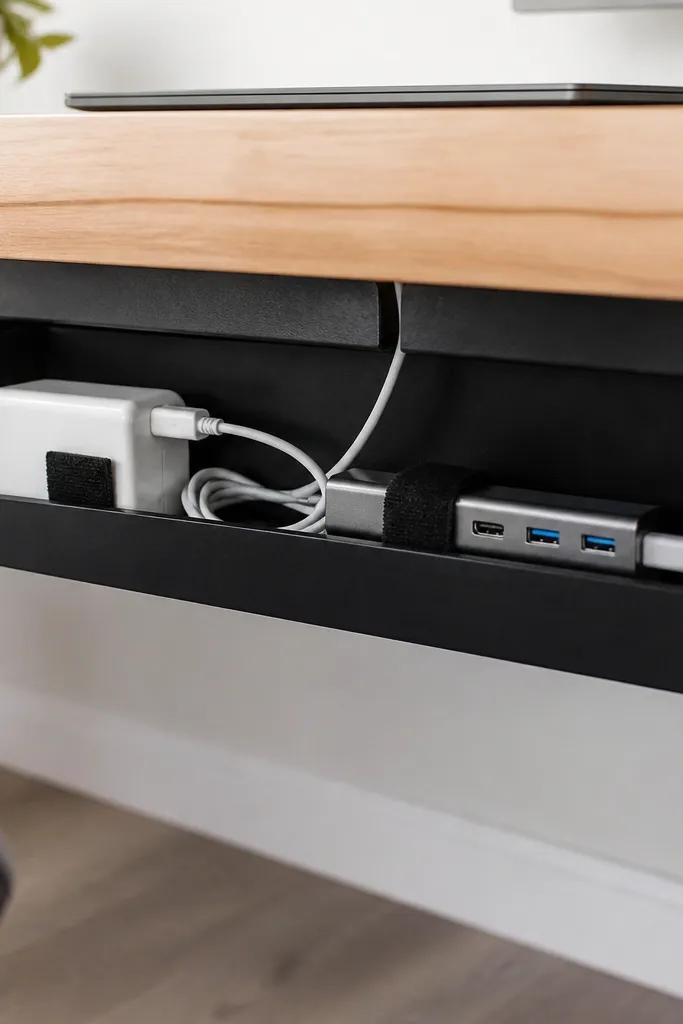
This fixes the cable spaghetti that makes a desk look chaotic even when the surface is clear. The tray is low-profile and hidden under the front edge, so the desk still looks clean from above. Wrapping the cardboard in matte black makes it blend with dark desks and frames the cables in a controlled line. Using Velcro tabs keeps cords from sliding and lets kids detach a charger without yanking everything.
Editor's noteTuck extra cord length into the tray in a loose loop, then strap it down with one Velcro tab so it never springs back.
Cut the cardboard into a shallow rectangle about 10 inches long and 4 inches deep, sized to the space under your desk lip. Wrap it with matte black contact paper, pressing edges tight with a credit card. Add two Velcro strips on the top — one near each end — and stick matching Velcro on the underside of small cable ties or directly on cable loops. Use two small command hooks or screws into the desk underside to hang the tray.
Skip thisDon’t leave the tray unwrapped or glossy — shiny cardboard always looks cheap.
2. Magnetic screwdriver strip from a picture frame insert
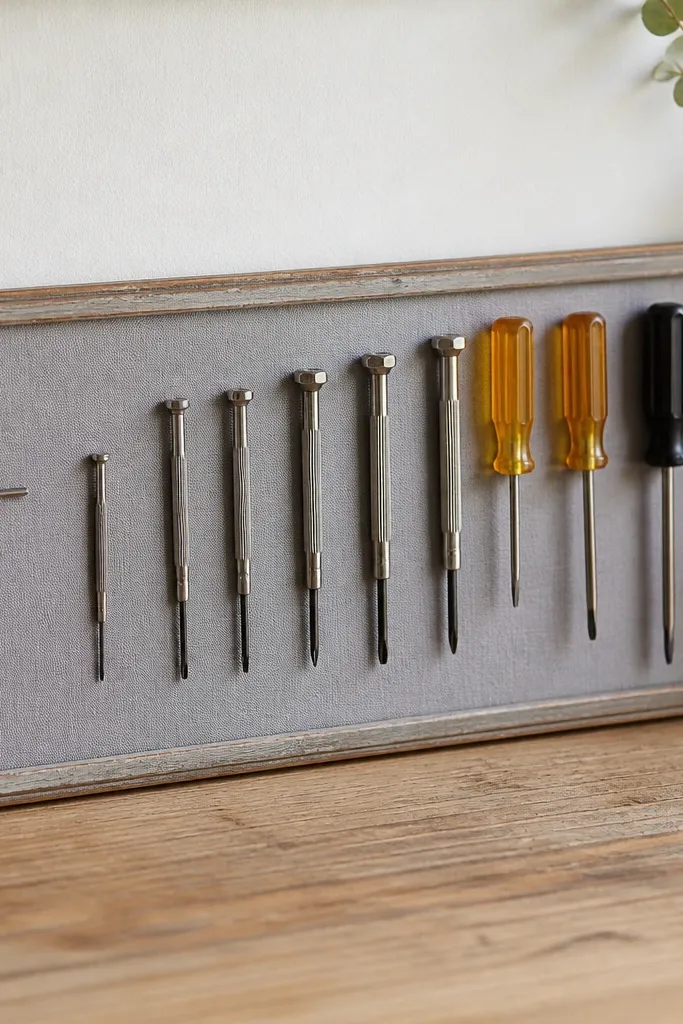
This makes tools easy to find and keeps the desk from turning into a “where did that go” mess. The frame backing gives you a flat, rigid surface that looks tidy on a wall or inside a cabinet door. Light gray fabric softens the look and keeps the magnets from looking like bare hardware. Neat tool spacing creates a minimalist rhythm that feels calm even for a busy kid station.
Editor's noteLine up the magnets so the heaviest tool sits closest to the mounting screws.
Remove the cardboard backing from a picture frame and cover it with gray felt or linen-look shelf liner using spray adhesive. Hot-glue or super-glue small neodymium magnets in a straight line, spacing about 2 inches apart for small hex keys. Mount the frame backing vertically with two screws or picture hangers. If you don’t have magnets, use a magnetic strip from an old kitchen knife holder and glue it down.
Skip thisDon’t mount it too high where kids yank tools at an angle — magnets can loosen and tools fall.
3. Cereal-box vertical letter slots with clean label tabs
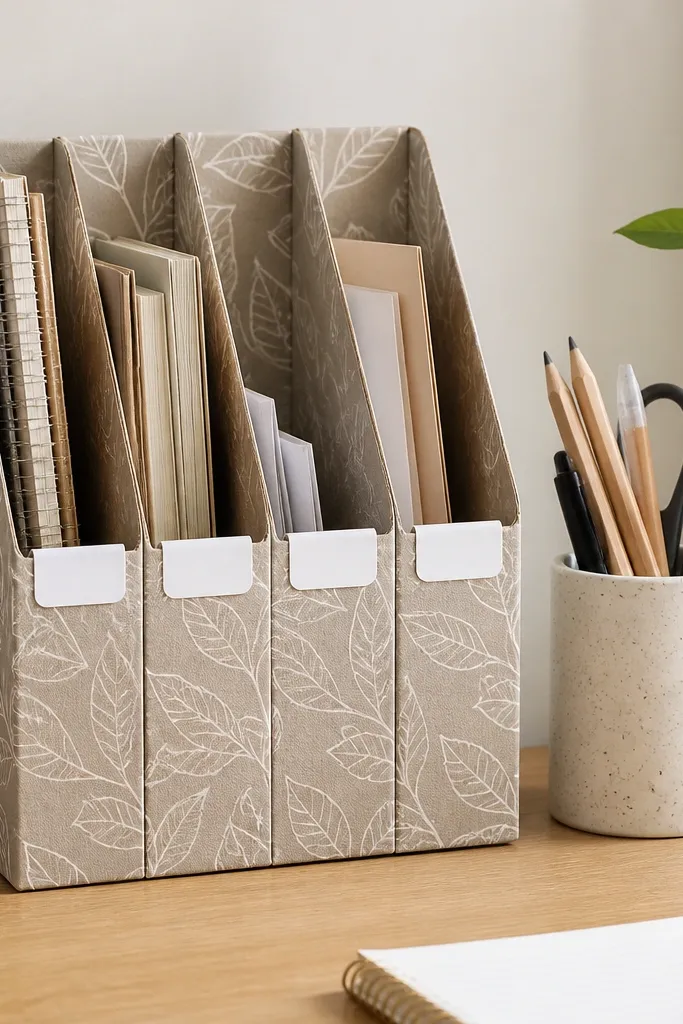
Vertical slots stop paper from spreading across the desk and make the desk look “designed” instead of messy. Cereal boxes are sturdy enough if you reinforce the corners and wrap them well. The label tabs make it kid-friendly because they know exactly where homework returns go. Keeping the labels consistent in size looks modern and reduces visual noise.
Cut the cereal box into four tall panels, about 11 inches high and 3 inches wide each. Reinforce the back edge with an extra strip of cardboard so it doesn’t bow. Wrap in matte white or cream contact paper. Create label tabs by cutting 1.5-inch-wide strips of white cardstock, folding them over the front edge, and writing with a black paint marker.
Use tab labels like “Today,” “To File,” “Return,” and “Keep” so kids can sort without reading full words.
Don’t use glossy wrapping — the glare makes the organizer look like craft material.
4. Linen-look fabric desk drawer organizer for erasers and markers
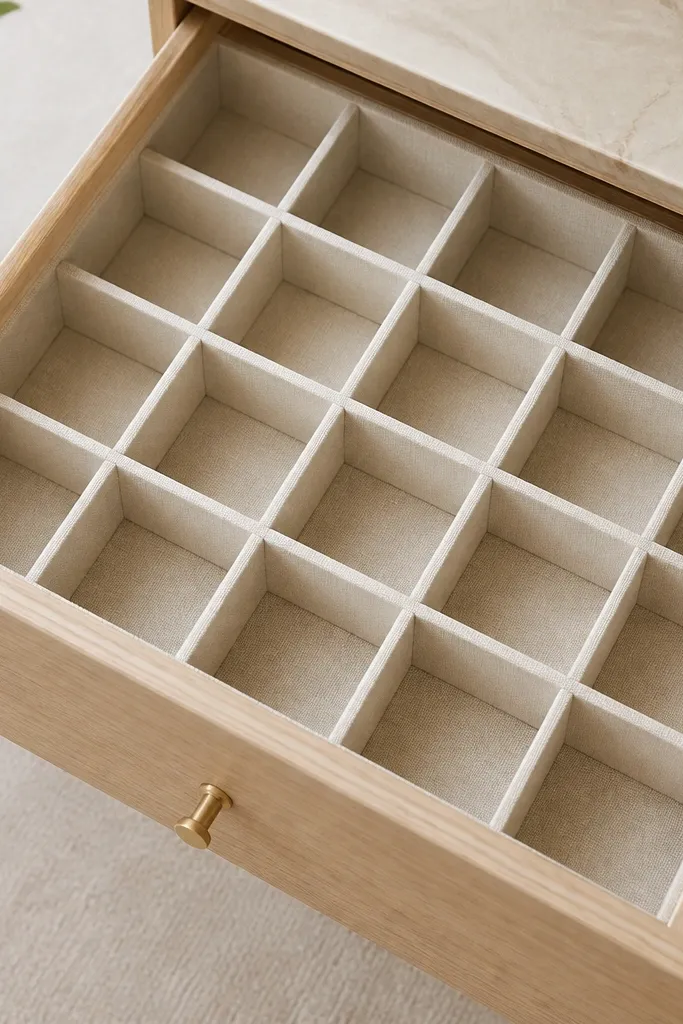
A fabric-covered organizer keeps tiny supplies from becoming a single gray pile. Foam board is easy to cut and holds crisp edges, which is what makes it look minimalist instead of homemade. The linen-look fabric softens the whole setup and makes it feel calmer for kids. A grid layout also helps you see what’s missing at a glance.
Editor's noteStore markers tip-down in one compartment and keep erasers flat in another so they don’t roll.
Cut foam board to match your drawer footprint, then build a grid using thin foam strips. Keep compartments between 1.5 and 2.5 inches wide depending on what you store. Cover the whole insert with fabric using spray adhesive, then wrap the edges with a narrow strip of matching fabric. Use a light gray drawer liner under it so it slides less.
Skip thisAvoid loose fabric edges — if the corners lift, it looks sloppy fast.
5. Corner wall shelf from a 2x4 offcut with rounded edges
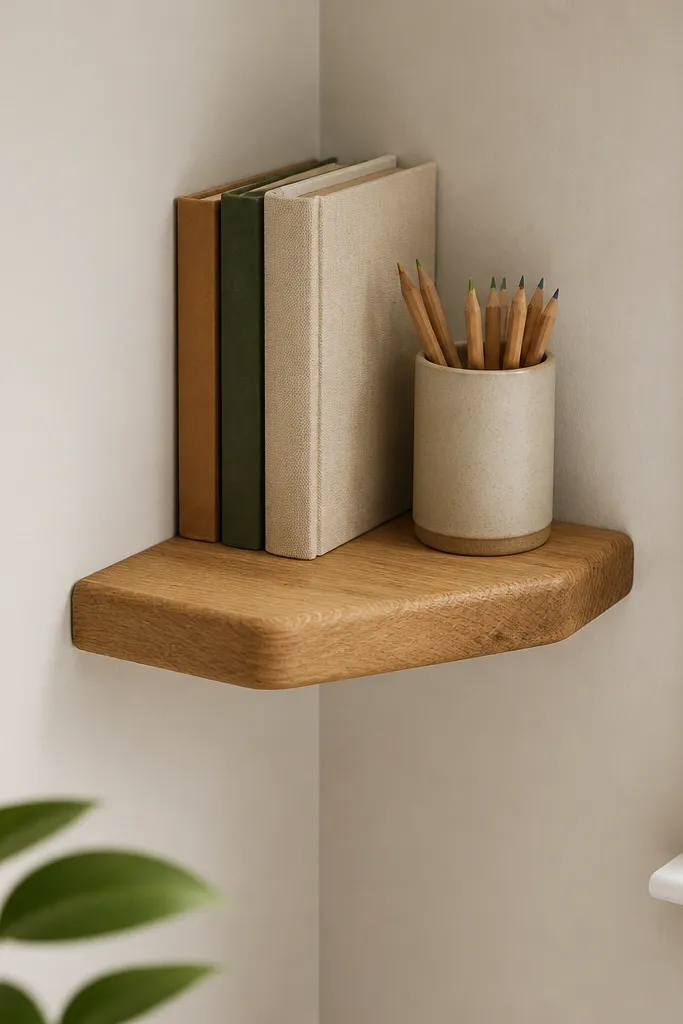
A corner shelf clears desk surface without crowding the room. Using a 2x4 offcut gives you thickness, so the shelf doesn’t flex when kids bump it. Rounding the front edge makes it look intentional and safer for little arms. This works especially well for desk setups where you need books nearby but still want a clean tabletop.
Cut the 2x4 into a shelf about 14 inches long and 6 inches deep. Sand through 120 then 220 grit, and round the front edge with a router or sandpaper curve. Stain with a light oak tone, then add two thin coats of matte clear sealer. Mount with two heavy-duty corner brackets or two studs with screws.
Put your pencil caddy on a small rubber mat so it doesn’t slide during homework chaos.
Don’t leave sharp corners — they catch scuffs and make the shelf look unfinished.
6. Pegboard pencil rail with binder clips for quick swaps
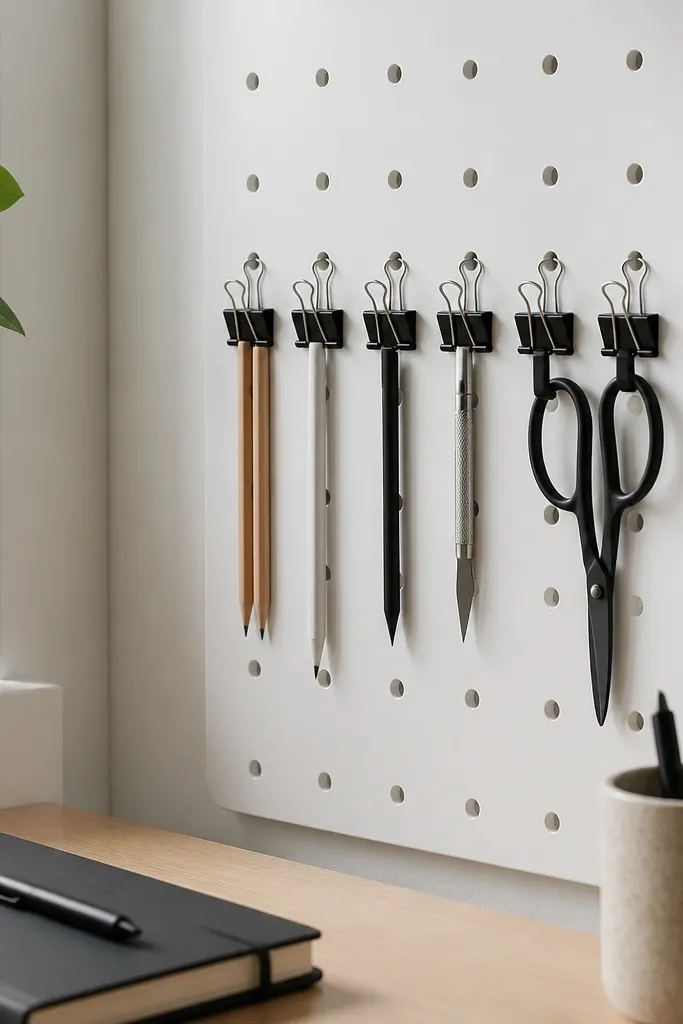
Pegboard is the fastest way I’ve found to get minimalist organization that still adapts as kids grow. Binder clips let you reposition tools without drilling new holes every time. Painting the pegboard matte white keeps it modern and stops it from looking like a garage. Vertical hanging also prevents pencils from rolling and keeps tips protected.
Editor's noteUse two clip heights: taller for pencils, shorter for erasers and small tools, so the layout reads clean.
Cut pegboard to a size like 12x16 inches and paint both sides if it’s exposed. Add binder clips to peg holes spaced about 2.5 inches apart. Use a small tray clip at the bottom for scissors or a ruler. Mount next to the desk with wall anchors rated for the weight you’ll hang.
Skip thisDon’t mix colors of clips — black and steel together can look messy.
7. DIY acrylic-look cable labels using painter's tape and clear coat

Cable labels are a small thing, but they make a desk feel organized because you don’t have to guess what plugs where. Painter’s tape gives you clean edges, and a quick clear coat makes the label feel like a finished product. This is perfect for kids because they can match “tablet” to the right charger without asking. The result looks modern because the text is consistent and the labels sit aligned on the cable bundle.
Wrap the end of a painter’s tape strip around the cable, then write the label with a fine-tip permanent marker. Trim the tape edge with scissors so it’s straight. Brush a thin layer of clear matte or satin clear coat over the label once it dries. Let it cure fully before bending the cable hard.
Label by device name, not by “left” and “right” — kids remember device names better.
Don’t label with marker alone — untreated tape edges peel and the look gets messy.
8. Bottle-cap magnet "paperweight" strip for tiny notes
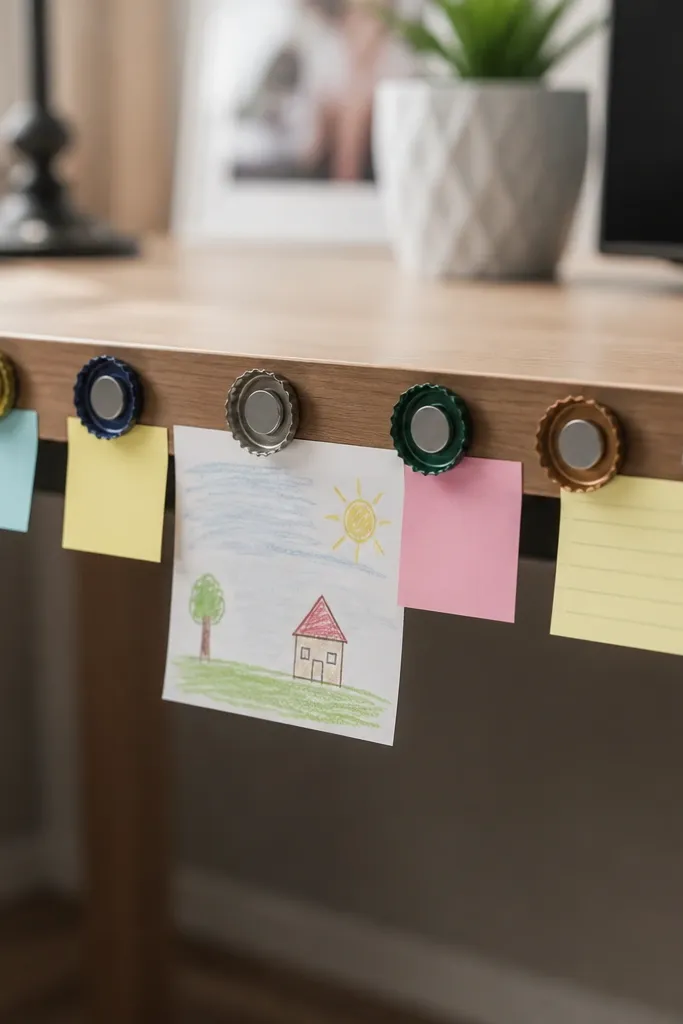
This is a budget trick that turns loose notes into a controlled display. Bottle caps look quirky at first, but when you spray paint them matte black or brushed silver and keep the spacing even, they read minimalist. The magnets hold sticky notes flat so they don’t flap around the desk. It also gives kids a place to put “teacher says” notes immediately.
Find bottle caps with flat backs, clean them, then spray paint matte black. Glue one strong round magnet to the back of each cap. Arrange caps on a strip of thin wood or a cardboard strip, spacing caps about 1 inch apart. Mount the strip on the side of the desk with two small screws or adhesive strips.
Use one cap for “today’s note” and keep everything else in a separate paper slot so the board doesn’t become clutter.
Avoid shiny metallic paint — it reflects desk lights and looks less modern.
9. Matte black foam-board monitor riser with hidden tray
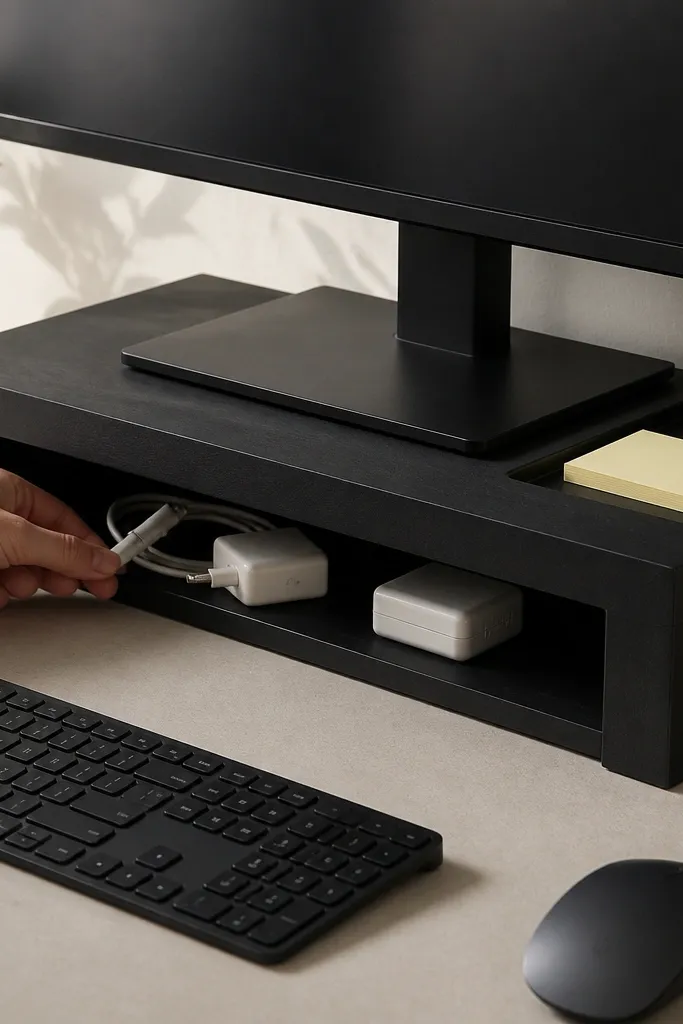
A riser gives you more surface control because the space under the monitor becomes storage instead of dust. Wrapping thick foam board in matte black makes it look like a store-bought organizer. The hidden tray keeps small items like USB drives and extra pens out of sight. For kids, it also keeps screens higher so they can work comfortably without leaning forward.
Editor's notePut a small rubber drawer liner on the top tray so sticky notes don’t slide.
Build a riser base about 18 inches wide and 10 inches deep, with a front opening for the hidden compartment. Use 3 layers of foam board for thickness so it doesn’t sag. Wrap with matte black contact paper, then add a thin hinge or friction fit for the top tray. Store small items inside the compartment and keep sticky notes on top.
Skip thisDon’t make it too thin — flimsy risers wobble and look homemade.
10. Painted mason jar pencil caddy with a felt base
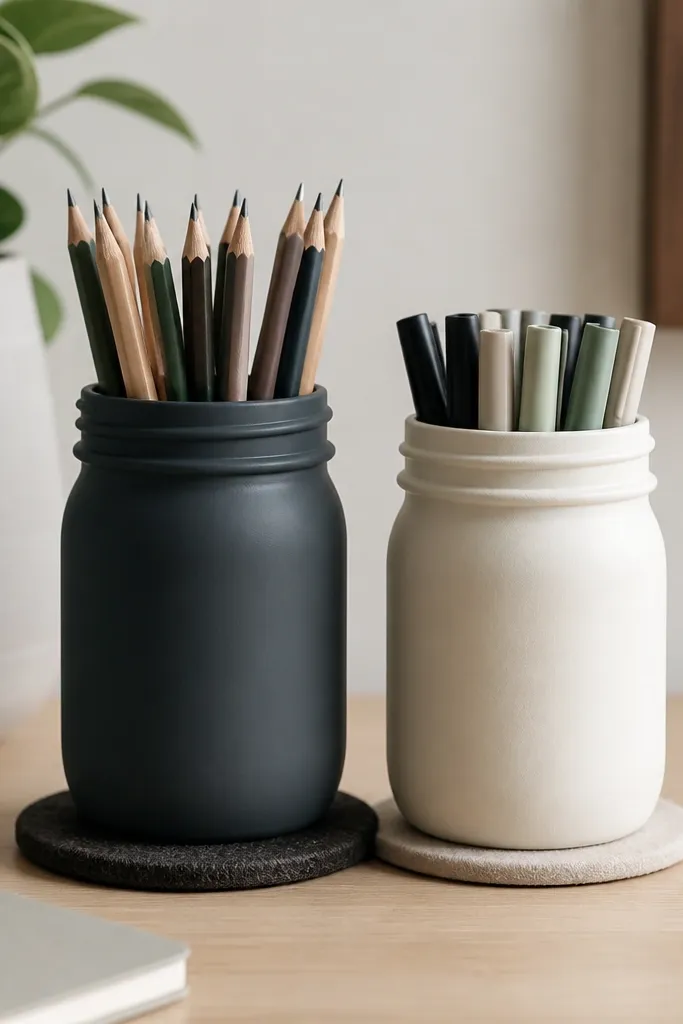
Jars are the fastest way to get clean desk organization because they separate pencil types without complicated pieces. Painting them matte charcoal and cream makes the look modern and soft, not “rustic kitchen.” A felt base stops jars from sliding and keeps the desk surface from getting scratched. This setup works great for kids because pencils stay upright and easy to grab.
Clean mason jars, then spray paint with matte paint in charcoal and cream. Cut felt circles to match the jar bottoms and glue them on with fabric glue. Use one jar for standard pencils and the other for markers or scissors. Keep jar spacing about 5 inches so it doesn’t look crowded.
Add a small strip of painter’s tape on the jar rim and write “PENCILS” or “MARKERS” in black.
Avoid glossy paint — it reflects light and makes the jars look cheap.
11. Cork sheet memo board frame from picture frame and scrap cork
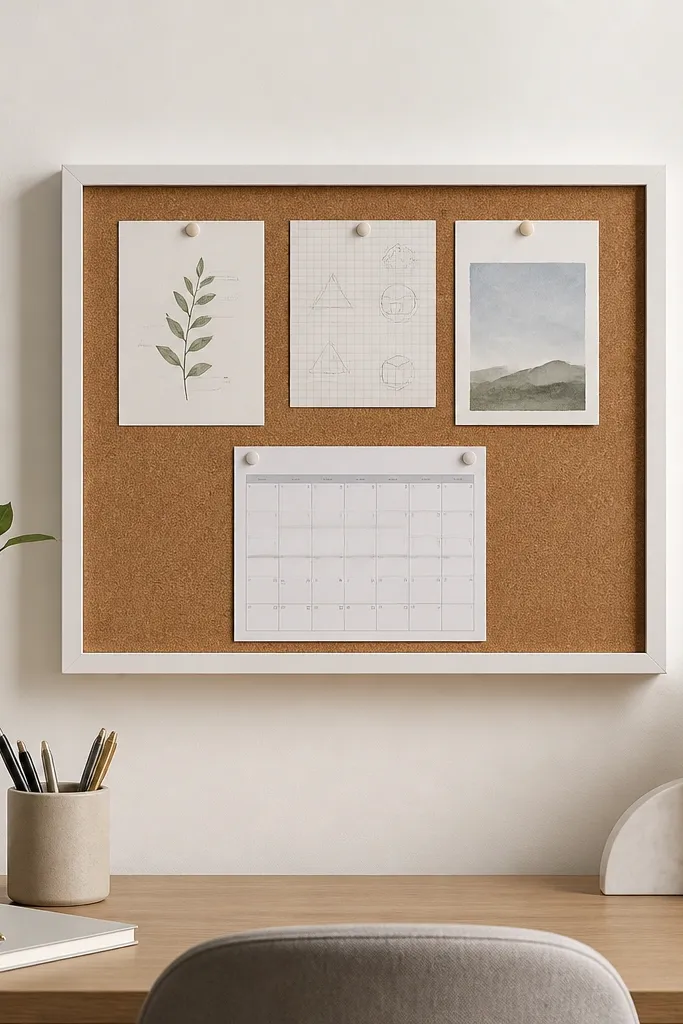
A memo board keeps papers from taking over the desk while still giving kids a place to refer to important sheets. Cork is forgiving — pins go in cleanly, and it’s easy to rearrange. Using a plain picture frame keeps the board looking minimalist. This is especially good for homework stations where you want the calendar and weekly checklist visible.
Cut scrap cork sheet to fit the inner frame opening. Use a thin layer of wood glue or double-sided tape to attach cork to the frame backing. Add a few push pins only — keep it to 5-8 items so it doesn’t become a paper dump. Mount at eye level for kids so they can pin things themselves.
Group by type: one section for “teacher notes,” one for “due dates,” and one for “finished work.”
Don’t fill it with everything — empty space looks better and keeps it functional.
12. Desk drawer risers made from scrap wood strips for better visibility
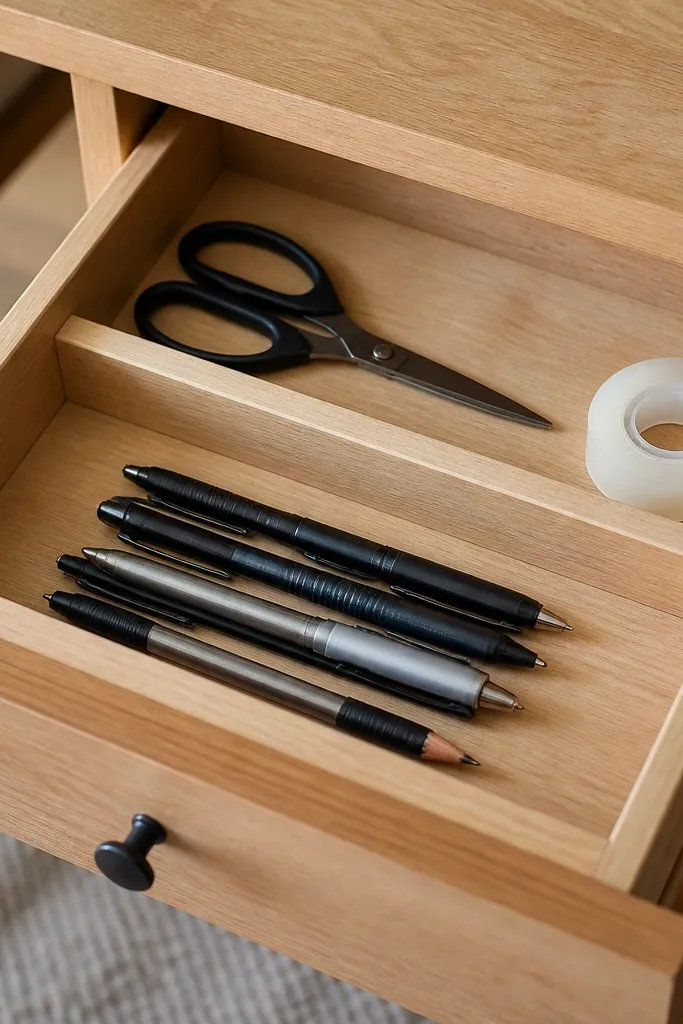
Two-tier storage is how you stop the bottom of a drawer from turning into a hidden junk cave. Scrap wood strips are cheap and look clean when they’re sanded and sealed. The risers create visibility so you can grab what you need in seconds. Kids also learn faster because the top layer is “daily use.”
Cut wood strips about 3/4 inch tall and 1 inch wide to fit inside the drawer. Sand edges smooth and seal with matte clear coat. Place strips parallel with a gap of about 6 inches so items don’t topple. Add a thin felt strip on top of the wood so tape dispensers don’t slide.
Keep tall items only on the bottom tier and flat items on the top to avoid constant rearranging.
Don’t skip sealing — raw wood fibers catch lint and look worn quickly.
13. Towel-bar style paper roll holder using plumbing pipe scraps
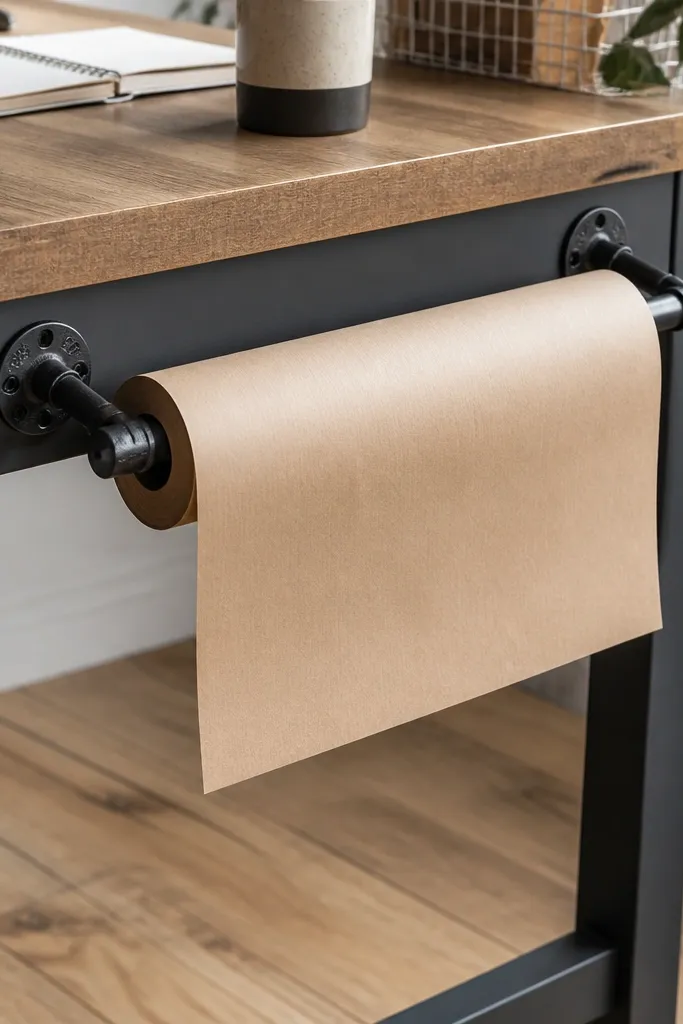
For kids who draw, paper rolls get messy when they’re stored flat or in a pile. A simple towel-bar style holder keeps the roll accessible and keeps the desk clear. Black metal matches most minimalist desks, and the straight unroll prevents torn edges. It’s also a space saver because it uses vertical side-wall space.
Editor's noteHang a small scissors hook next to it so cutting paper becomes a one-step habit.
Use small pipe fittings and two wall flanges. Mount the holder to the wall or inside a cubby side, about 4 inches above desk height. Slide a paper roll onto the bar, then add a small end cap or magnet stop so it doesn’t slide off. Paint the pipe matte black if it’s not already.
Skip thisDon’t mount it too low — kids will bump it and the roll will skew.
14. Desk-edge tray from a cut-down cutting board with rubber feet
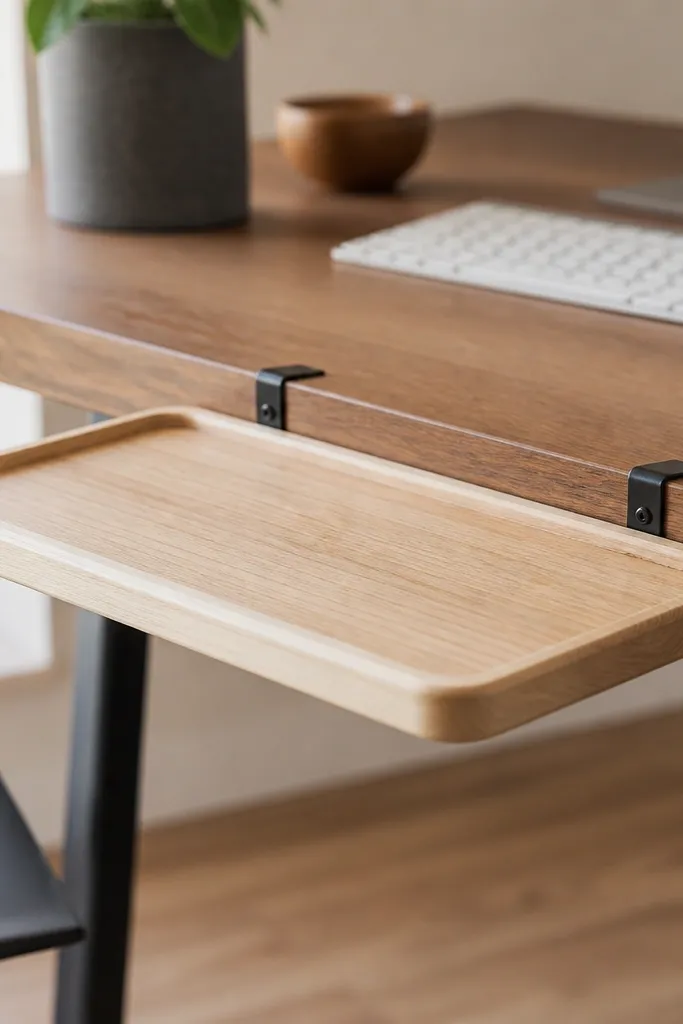
A front-edge tray is where mail, permission slips, and “quick drop” items go. It keeps the center of the desk clear, which is exactly what makes the setup look modern minimalist. The cutting board material looks warm and clean, and rubber feet prevent scratching and sliding. I’ve used this for after-school drop zones where backpacks are off but papers need a landing spot.
Editor's noteUse one tray for incoming papers only; outgoing papers go in a separate slot so they don’t mix.
Cut a cutting board to about 14 inches long and 4 inches deep. Sand edges and wipe with mineral oil or a light matte sealer. Attach two L-brackets under it, then screw into the underside of the desk edge. Add rubber feet where the tray contacts the desk so it doesn’t rattle.
Skip thisAvoid metal-on-wood scraping contact — it makes a noisy, unfinished look.
15. Wraparound book ledge using foam board and fabric binding
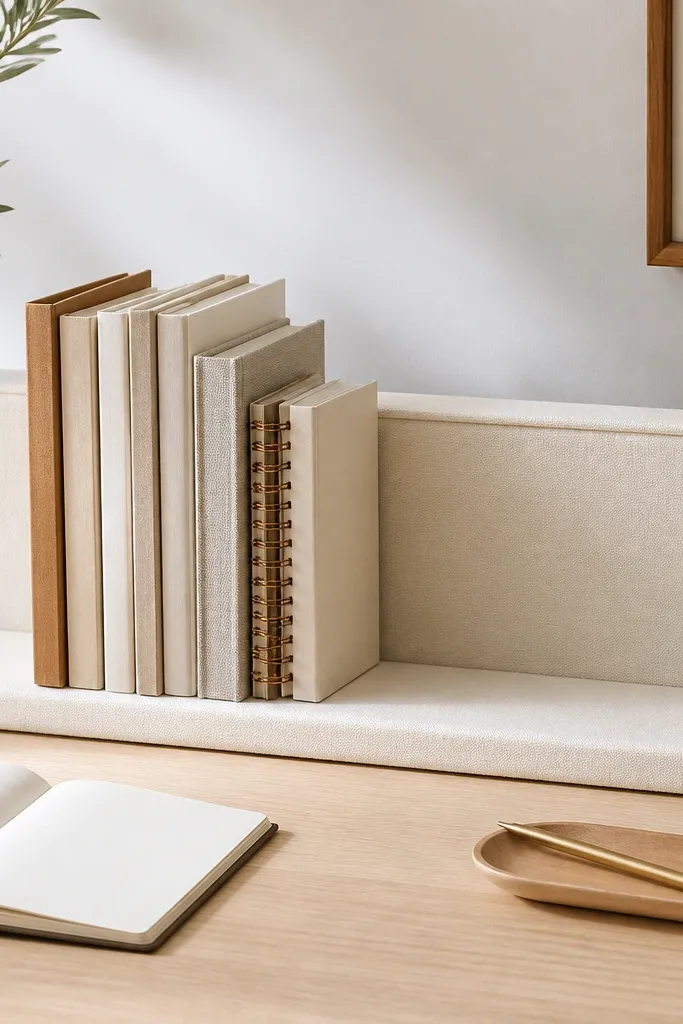
This is the desk version of a book stand, and it stops the “books sliding everywhere” problem. Foam board is light and easy to cut, and fabric binding hides the edges so it looks intentional. Keeping the back wall low makes it minimalist and keeps the view open. It’s great for kids because they can pull a book forward without the whole stack toppling.
Cut foam board into a base about 12 inches wide and 6 inches deep. Add a back wall about 2.5 inches tall so books don’t slip behind. Cover with cream fabric and bind the edges using a strip of matching fabric glued around the corners. Place the ledge on the side of the desk where books are used daily.
Angle the back wall slightly (about 5 degrees) so books lean forward naturally when kids pull one out.
Don’t leave raw foam edges exposed — it looks like a craft project.
16. DIY desk stamp station using a shallow plastic bin and cork divider
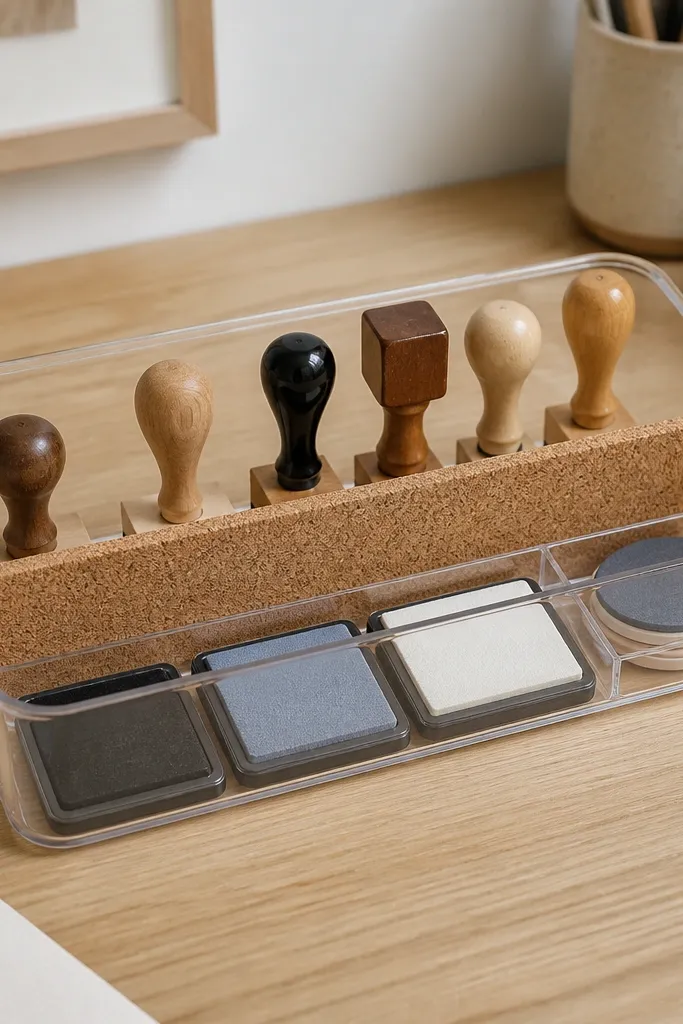
Stamp and craft tools scatter fast. This setup keeps stamps standing upright and separates ink from stamps so you don’t smear everything. Cork is easy to cut, and it grips stamp handles so they don’t slide. The clear bin gives you a modern look and helps you see what’s inside without opening lids.
Editor's noteLabel the bin lid with a single word in black marker so kids know where it goes when they’re done.
Use a shallow clear plastic organizer bin about 16 inches wide. Cut cork to fit as a divider, leaving two compartments: one for stamps and one for ink pads. Add a thin felt strip on the bottom where ink pads sit so they don’t scratch. Keep the whole station on the right side of the desk near a craft mat.
Skip thisDon’t stack ink pads on top of stamps — it makes the whole station messy.
17. Mousepad-sized desk mat made from scrap vinyl and a thin felt layer
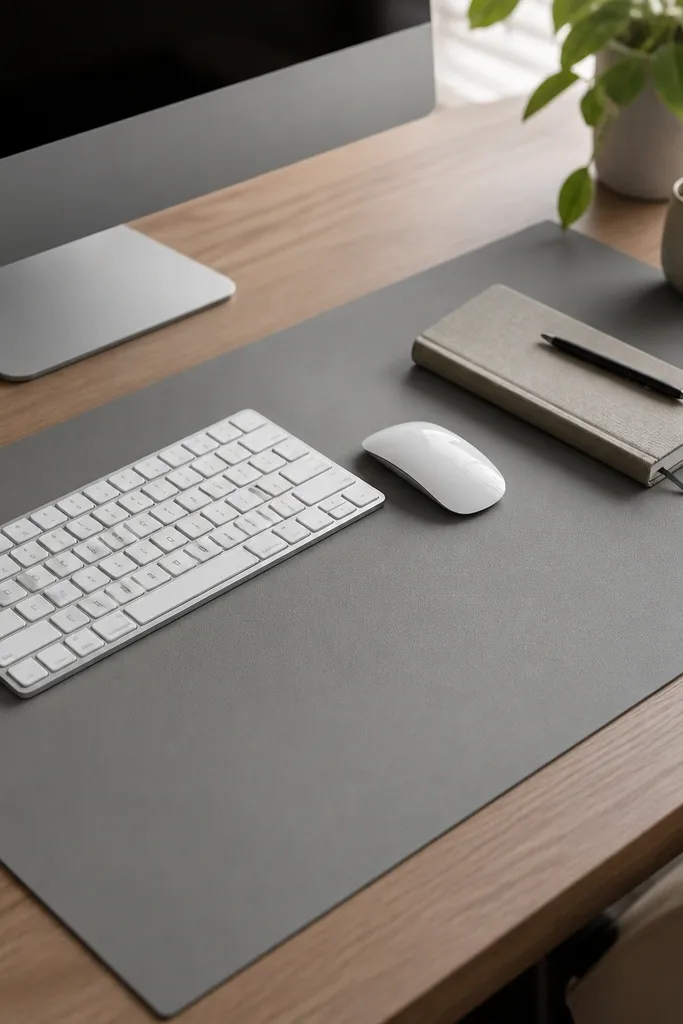
A desk mat is the easiest way to make organization look intentional because it creates one clean surface boundary. When the mat is big enough to cover keyboard and notebook overlap, papers stop sliding into the cable area. Vinyl looks modern and wipes clean, which matters with kids and sticky hands. The felt layer keeps it from bunching and gives you a soft landing for pens.
Editor's notePut your pen cup on the mat, not the bare desk, so the visual boundary stays consistent.
Cut scrap vinyl to about 30x16 inches. Glue a thin felt sheet to the underside using contact cement. Trim edges with a straight ruler and sharp utility knife. If you want a minimalist look, keep the vinyl solid gray or off-white and avoid patterns.
Skip thisDon’t use wrinkly vinyl — wrinkles show every bump and make the desk look sloppy.
18. Lidded jar stack for art supplies with uniform label dots
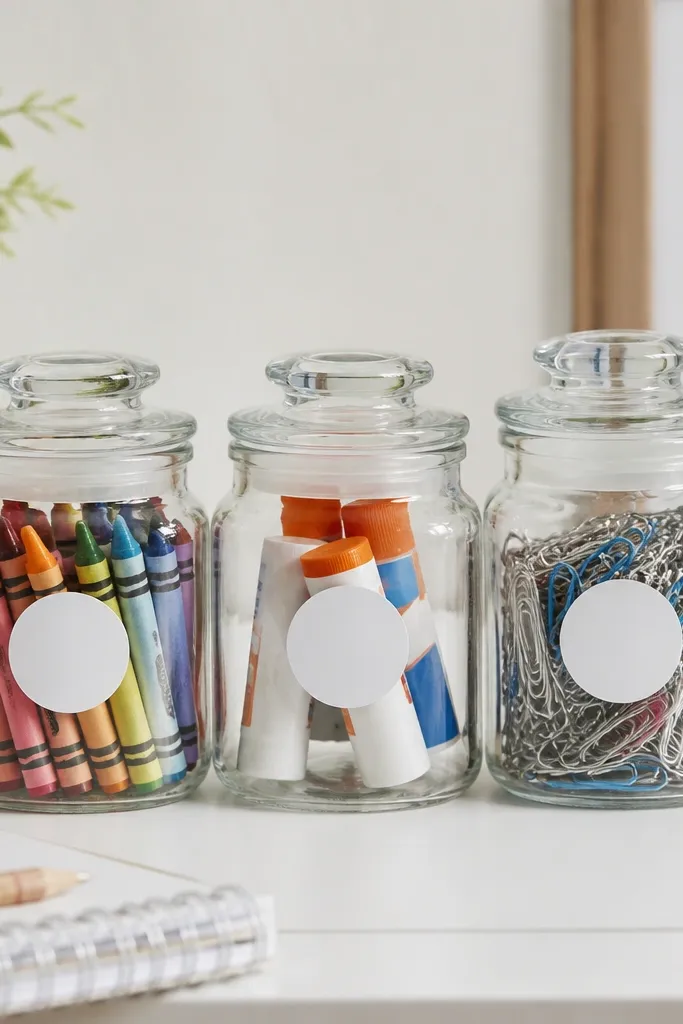
Matching jars make a desk feel organized because the shapes repeat and the labels stay consistent. Lids help with kids because small items don’t spill when the desk gets bumped. A label dot system keeps it minimalist — no big stickers, just a small dot and a word. This is good for art supplies because you can see contents quickly.
Use three jars with similar diameter, like 4-6 inch tall jars. Paint lids matte white or charcoal to match your desk palette. Add label dots on the side using white label tape cut into 1-inch circles. Group supplies by mess level: crayons in one, paper clips in another, glue sticks in another.
Keep one jar for “grab now” items and put rarer supplies in a cabinet so the desk stays calm.
Don’t mix jar sizes — uneven shapes make the whole setup look cluttered even when it’s organized.
19. Wall-mounted desk shelf with sliding tray from an old file organizer
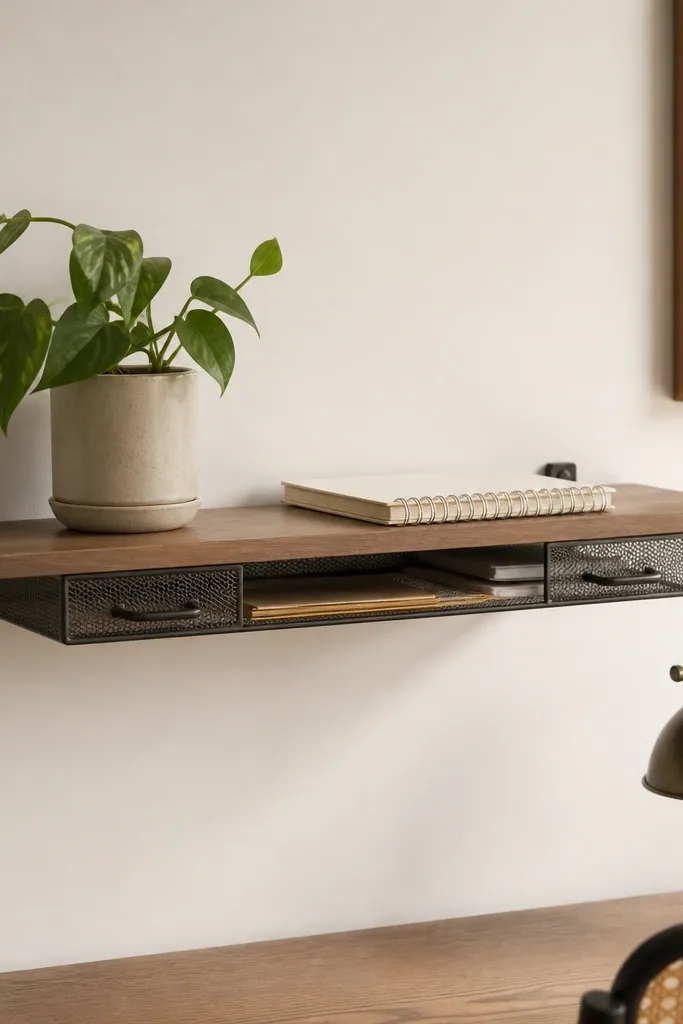
A sliding tray gives you a hidden work surface for kids' worksheets and makes it easy to clear the desk quickly. Repurposed file organizers glide better than you’d expect once you add two small felt strips on the contact points. The shelf above keeps reference materials visible without taking up desk space. The sliding motion feels tidy and encourages kids to close the tray when they’re done.
Use a shallow wall shelf and mount it with two brackets into studs. Cut or repurpose a file organizer drawer tray to fit under the shelf gap. Add felt strips on the sides where the tray touches the shelf so it slides without scraping. Install two small handles on the tray front so kids can pull it without grabbing the edges.
Store “daily worksheets” in the tray and keep the desk surface for active tasks only.
Don’t leave tray rails bare — metal-on-metal scraping looks rough and makes noise.
20. Corner clipboard with binder clips for homework turnaround
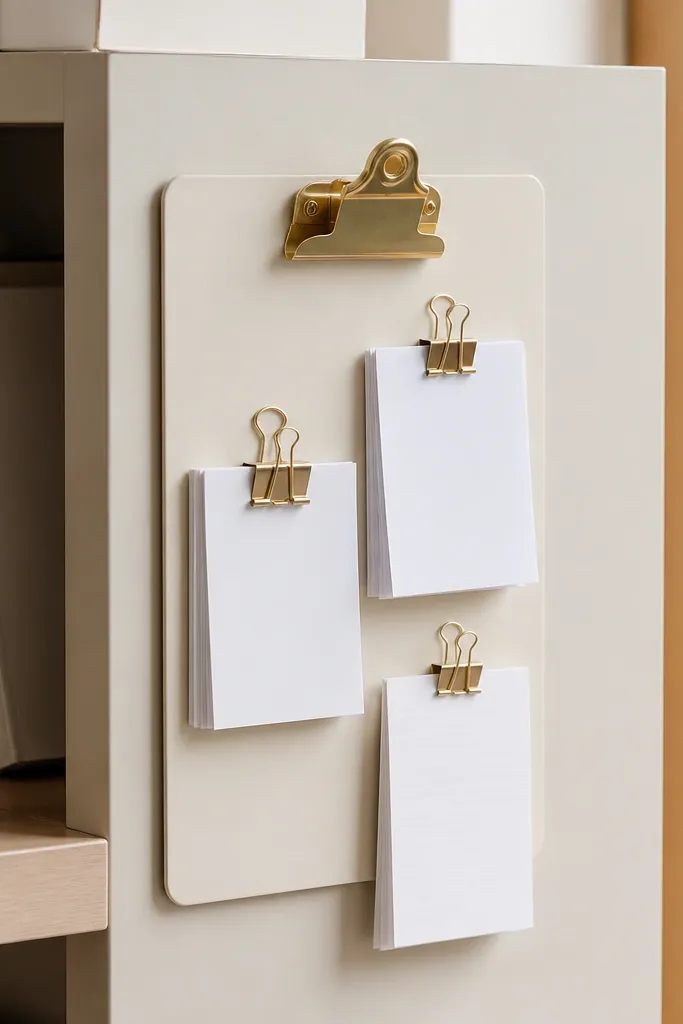
This one solves the “papers everywhere” cycle after school. A clipboard holds a stack flat, and binder clips separate incoming pages from returned work so kids don’t mix them up. Matte contact paper on the clipboard makes it look clean and modern. It also works as a visible checklist surface, which reduces the number of times you hunt for a missing permission slip.
Cover a cheap clipboard with matte cream contact paper for a uniform look. Mount it in a desk corner using two screws and small brackets. Add binder clips on the clipboard face in two rows, leaving about 1 inch between clip stacks. Use one row for “incoming,” the other for “returned.”
Write dates on the top sheet only, not every paper — kids need one clear reference point.
Don’t use glossy contact paper — glare makes the clipboard look like a craft supply.