
1. Felt pencil tray with a warm-oat lip
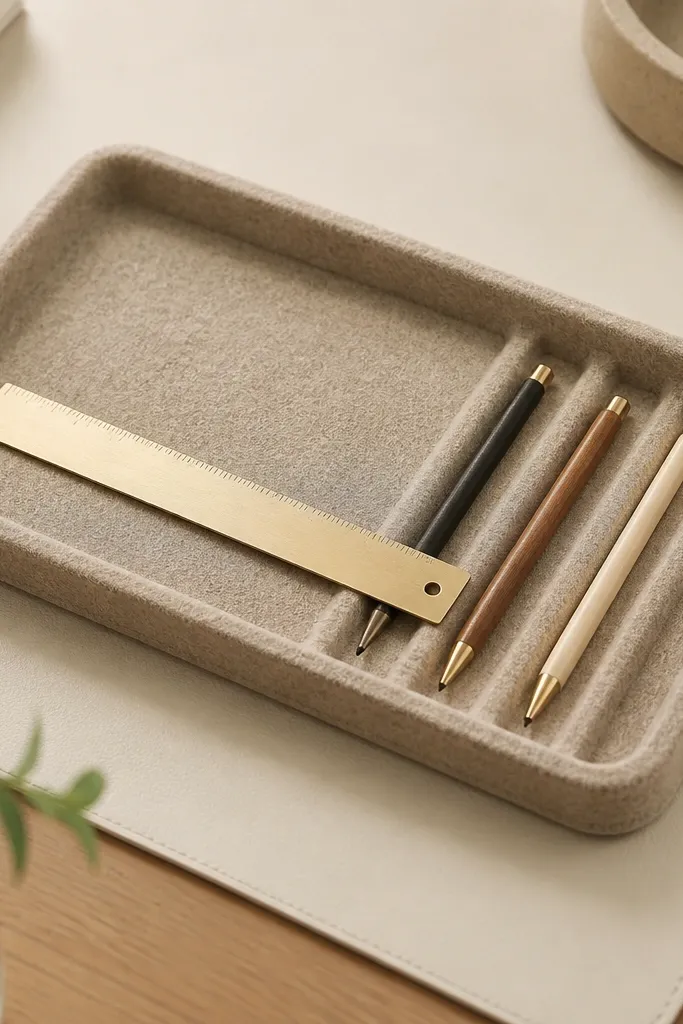
I make a felt-lined tray when I want the desk to look soft instead of “school supply storage.” Felt hides scratches and makes metal pencil tips feel less harsh. The oat tone warms up white paper and makes the whole station look intentional. The raised lip keeps pens from rolling off the edge.
Editor's noteLabel each slot with a tiny strip of label tape on the felt lip — kids pick up the right set without asking.
Buy a pre-cut felt sheet in oat or cream (about 1/4 inch thick) and wrap it around a shallow plastic or wooden tray. Use fabric glue for a clean edge, then add three dividers from felt strips glued upright. Keep the tray width around 10-12 inches so it sits neatly near the writing spot.
Skip thisDon’t use thin, fuzzy felt that sheds — it looks messy after a few weeks.
2. Cork board "paper landing" with cloth clips
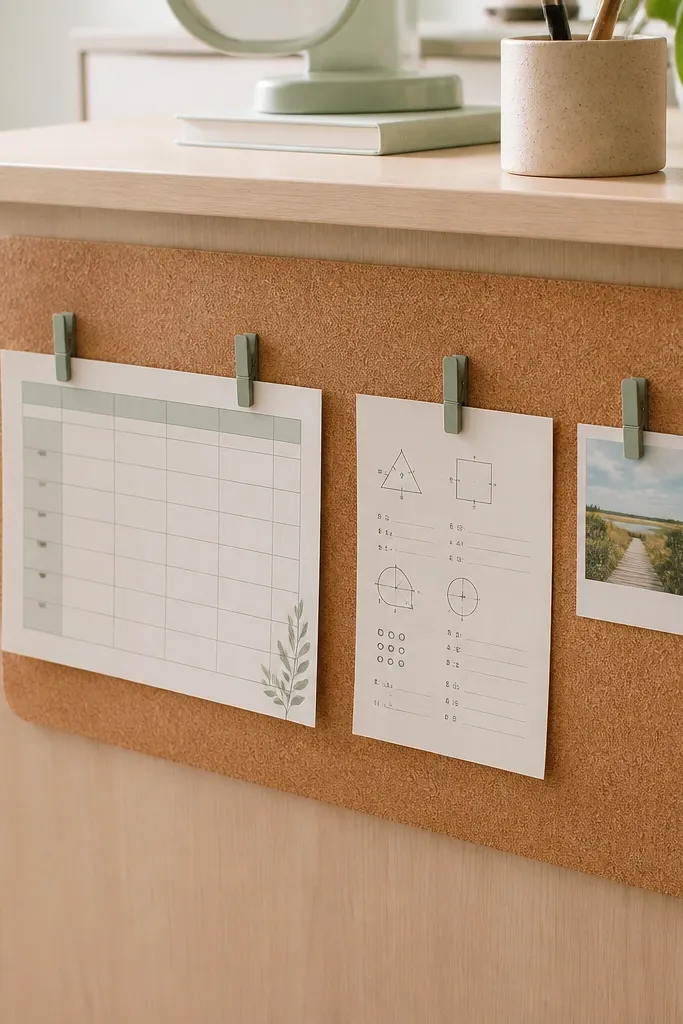
A cork landing zone stops the paper chaos that happens when kids set sheets down wherever they land. Cork has a warm, natural color that reads cozy even with busy pages. Cloth clips look softer than metal binder clips, and they hold paper without denting it. The board also keeps “what’s next” visible.
Editor's notePin one “today” sheet and one “done” sheet so the desk shows progress, not piles.
Get a small cork panel (about 12x16 inches) and attach it with picture-hanging strips or screws into the desk frame. Add clothespins with a matte finish in sage or dusty rose. Place the board at eye level for the student so they can check it without standing up.
Skip thisSkip glossy cork tiles or shiny clips — under desk lamps they reflect and look cheap.
3. Stackable fabric bins with color-coded lids
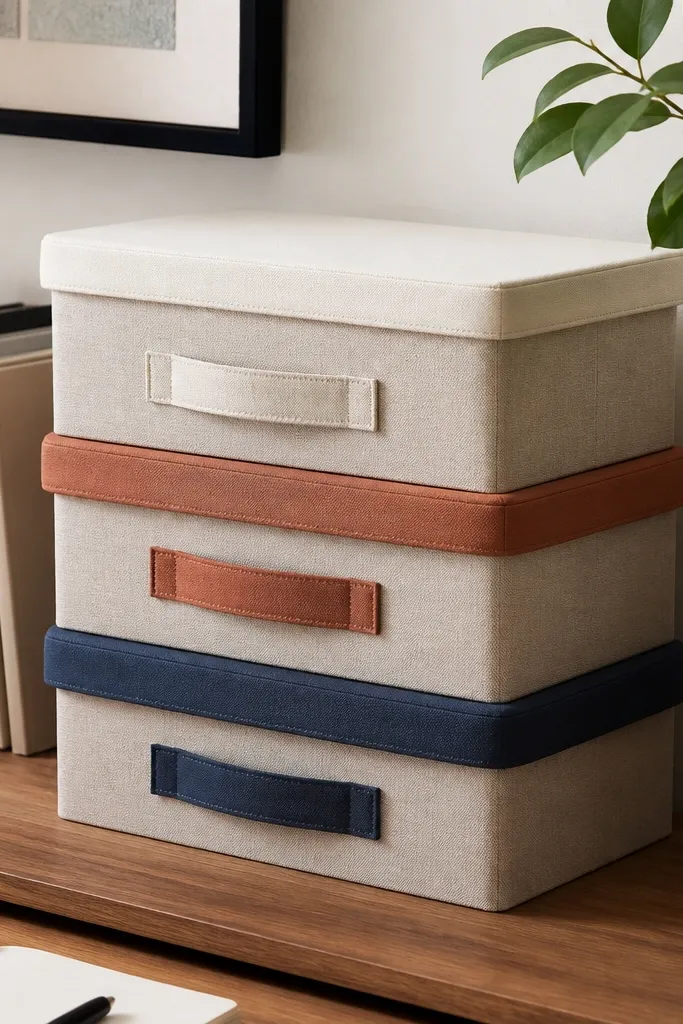
Fabric bins make storage feel softer, and color-coded lids keep it from turning into one big “misc” box. When kids can grab the correct bin by color, work time stays steady. The bins also hide the visual clutter that kills that cozy feeling. I like stacking because it saves floor space and keeps the desk tidy.
Use medium bins that are about 10-12 inches wide, and keep them in a single stack so labels stay visible. Choose lid colors that match the room — I usually do cream for general supplies and terracotta for art. Add label tape directly to the front of each bin, not on the lid top.
Keep only one category per bin: “Pencils,” “Art,” or “Homework papers.” Mixed bins turn into a dump.
Don’t overstuff — if the lid won’t close, kids will stop using the system.
4. Wooden wall rail for rulers and scissors
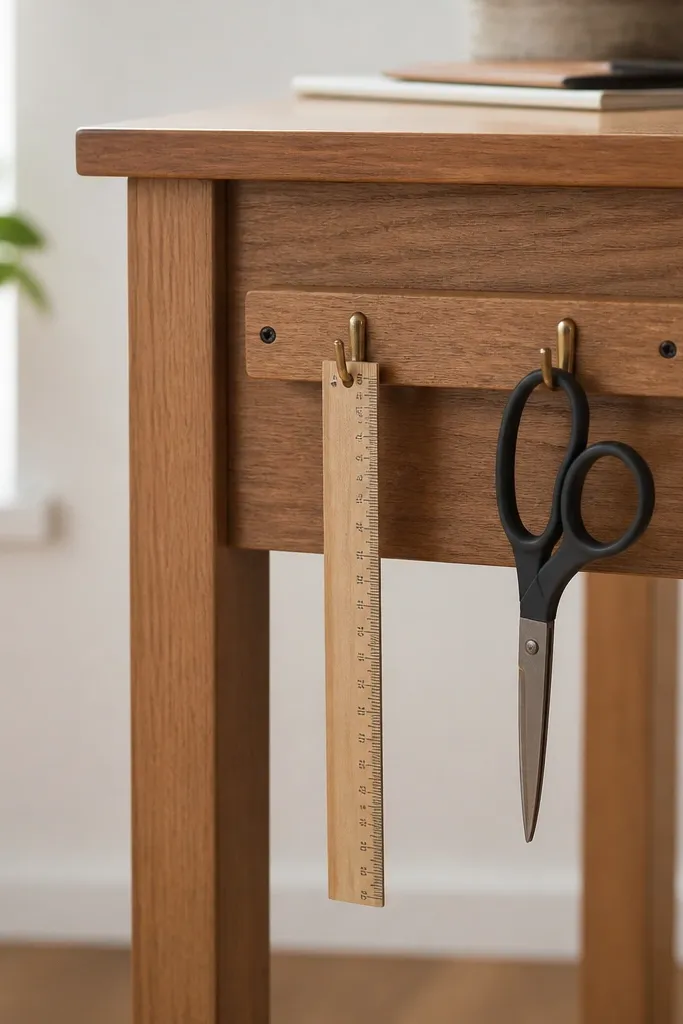
This is the fastest way I’ve found to reduce desk searching. A rail keeps long tools off the desktop, which instantly makes the center feel clear and cozy. Wood looks warmer than metal, especially under 2700K light. Hooks also let kids see what’s missing.
Editor's notePut the rail where the student’s non-writing hand naturally rests so grabbing tools feels automatic.
Mount a slim wood rail (about 24 inches long) at the desk side, roughly 4-6 inches above the desktop. Use two hooks spaced so scissors don’t bump the ruler. Keep the rail finish satin so it doesn’t glare.
Skip thisAvoid placing hooks too high — kids will stop reaching and leave tools on the desk.
5. Desk mat in oatmeal with stitched edge
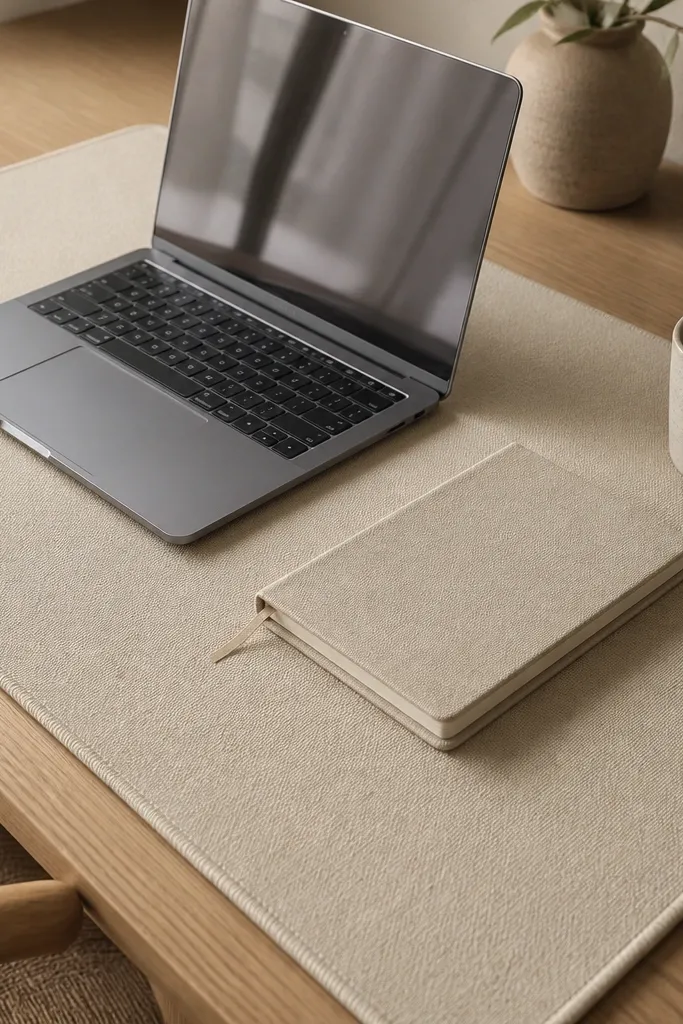
A good desk mat changes everything because it gives the desk one unified surface. Oatmeal canvas or faux leather reads warm and hides small spills. It also prevents paper edges from sliding around, which reduces frustration. The stitched edge makes it look finished instead of like a cheap placemat.
Choose a mat that covers at least the center 70% of the desk surface. If it’s faux leather, pick a matte finish, not shiny. For canvas, add a corner weight or non-slip dots so it doesn’t creep during writing.
Match the mat color to your pencil tray or bins so the whole setup looks like one plan.
Don’t use a thin paper mat — it wrinkles and looks sloppy fast.
6. Magnetic spice tins for tiny supplies
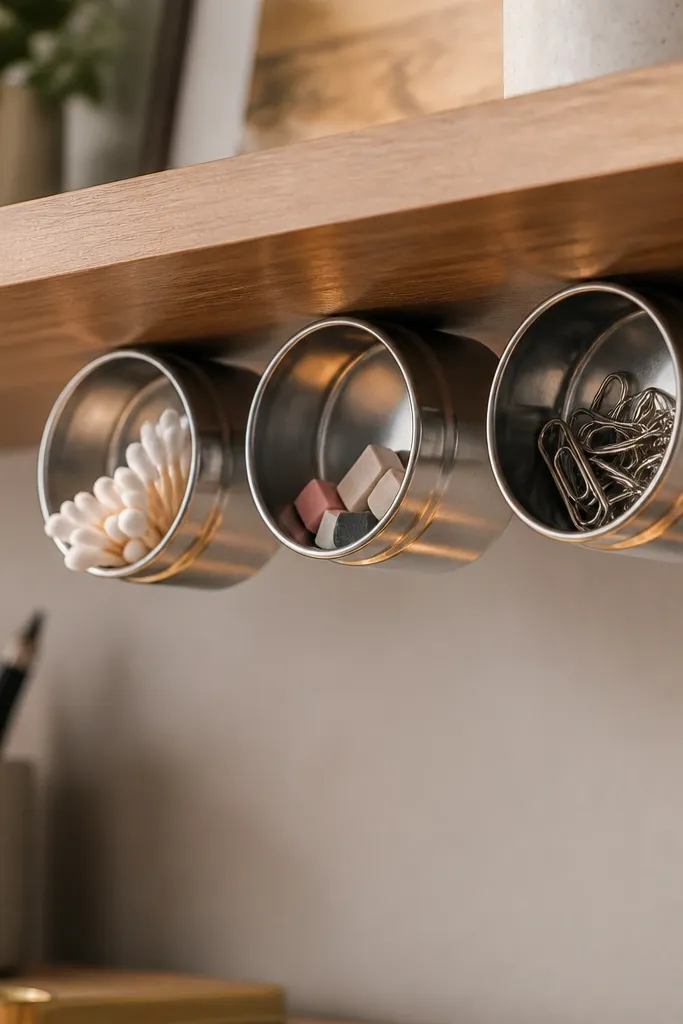
Tiny supplies are the reason desks look messy even when the big stuff is organized. Spice tins are small, stackable, and easy to label. The stainless look is clean, but the warmth comes from where they’re mounted — under a shelf with fabric or wood backing. Kids can grab one tin without dumping the whole drawer.
Editor's noteUse sticky foam tape behind the tins so they don’t rattle when kids bump the desk.
Mount a row of tins under a shelf or desktop overhang using strong rare-earth magnets or adhesive-backed magnetic strips. Keep three tins max at first: paper clips, erasers, and binder clips. Label the front with black label tape for high contrast.
Skip thisDon’t mount on a glossy metal strip — labels peel and the look gets slick.
7. Paper tray with a slanted front lip
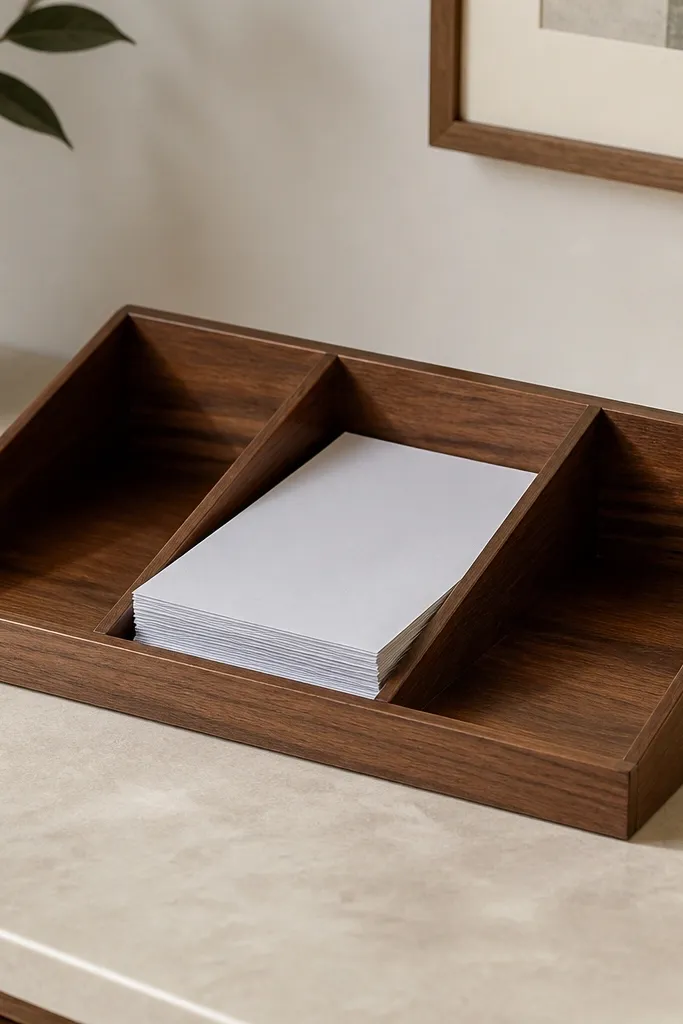
A slanted tray keeps papers visible and reduces the “paper avalanche” that happens when sheets go flat in a drawer. The warm walnut color makes it feel like furniture, not school storage. Three compartments keep the flow simple: what’s coming, what’s being used, what’s done. That flow is what makes studying feel calmer.
Editor's noteUse one color folder for each subject and drop it straight into the tray compartment by color.
If you buy one, look for a tray around 14-18 inches wide and at least 4 inches deep. If you DIY, use a wooden organizer base and glue divider pieces to create three sections. Keep the “working” compartment centered so the student reaches it first.
Skip thisSkip trays with deep bottoms — kids forget what’s in the back.
8. Faux fur cable sleeve for charging cords
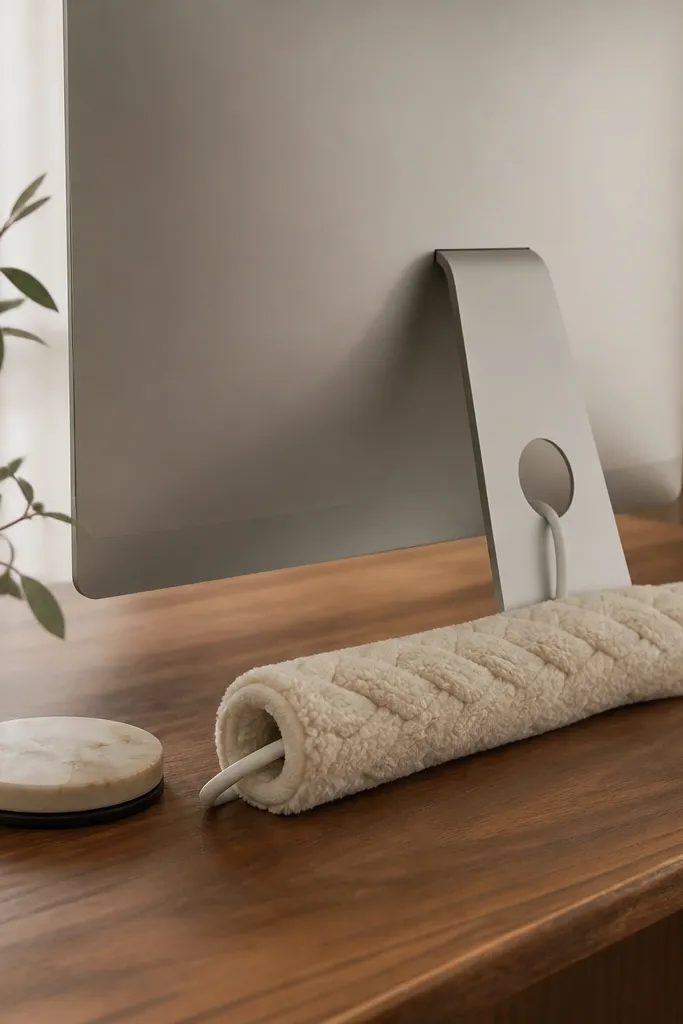
Charging cords make a desk look cluttered even when everything else is organized. A cable sleeve turns an ugly, dangling cord into a soft, hidden line. The cream faux fur reads cozy and also prevents the cord from snagging on chair wheels. It’s a small change that makes the whole station calmer.
Wrap the cord and brick with a removable sleeve sized to your charger. Tuck the sleeve behind the monitor or against the back edge of the desk. Secure with two small fabric ties so the cord doesn’t spring back out.
Label the charger sleeve with a small tag that says “Laptop” so it doesn’t get mixed up.
Don’t use a sleeve that sheds — lint on the desk mat looks gross.
9. Drawer liner in warm terracotta
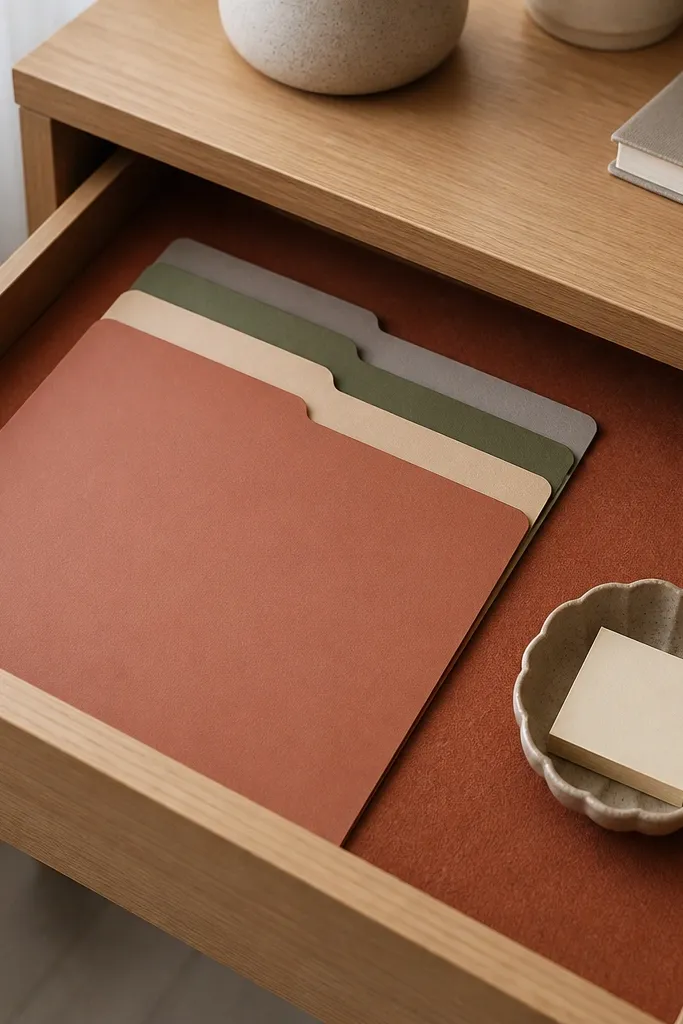
Cozy isn’t only what you see from standing height. When you open the drawer, warm liner makes the storage feel cared for. Terracotta hides minor stains better than pale liners. It also gives small items friction so they don’t slide around each time the drawer opens.
Cut felt or non-slip fabric liner to the drawer base with a few millimeters overlap at the edges. Use spray adhesive or double-sided tape around the perimeter only, not in the center. Add one divider strip of felt so sticky notes don’t drift into the wrong section.
Put the most-used items in the front third of the drawer so they’re easy to grab.
Avoid slippery plastic liners — they make items slide and look chaotic.
10. Clip-on lamp with 2700K bulb and cloth shade
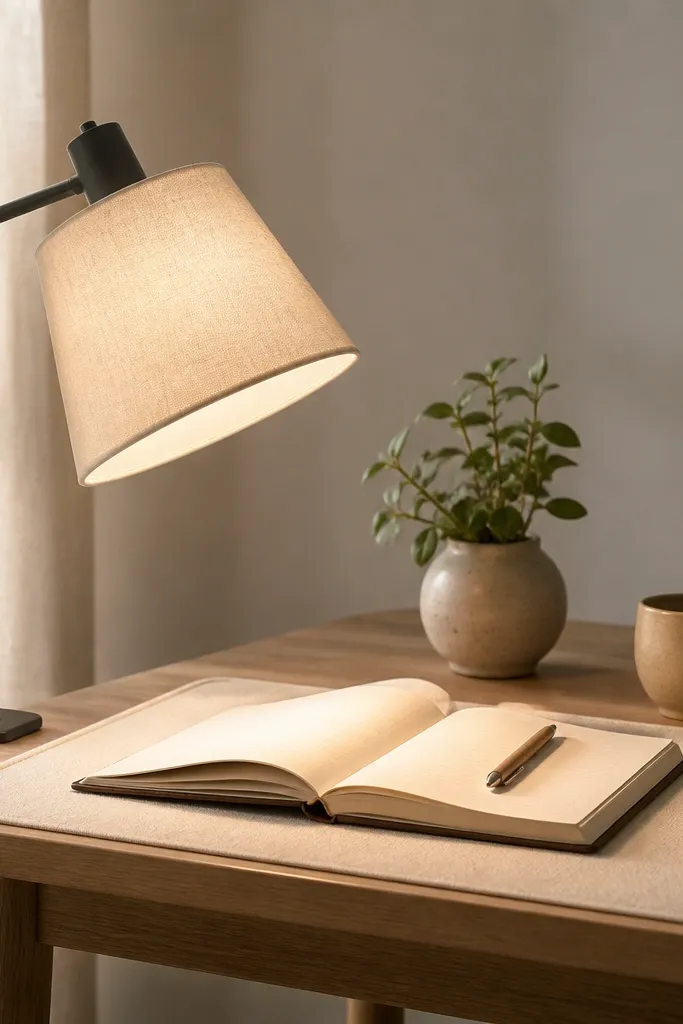
Overhead lights make everything look gray and harsh, and kids read that as “stress.” A 2700K bulb gives a warmer paper tone, and a cloth shade diffuses glare on glossy screens. The desk feels cozy because the light looks like it belongs in a living room, not a classroom. It also helps kids see pencil marks clearly.
Editor's noteTest it with a white sheet of paper — if it looks yellow and soft, you’ve got the right bulb temperature.
Choose a clip-on lamp with a shade diameter big enough to cover the reading area. Use a 2700K LED bulb (not daylight 5000K). Position the lamp so it shines from the side, not directly overhead.
Skip thisSkip bare bulb setups — they create bright spots and reflections.
11. Wall-mounted whiteboard with soft-tone marker tray
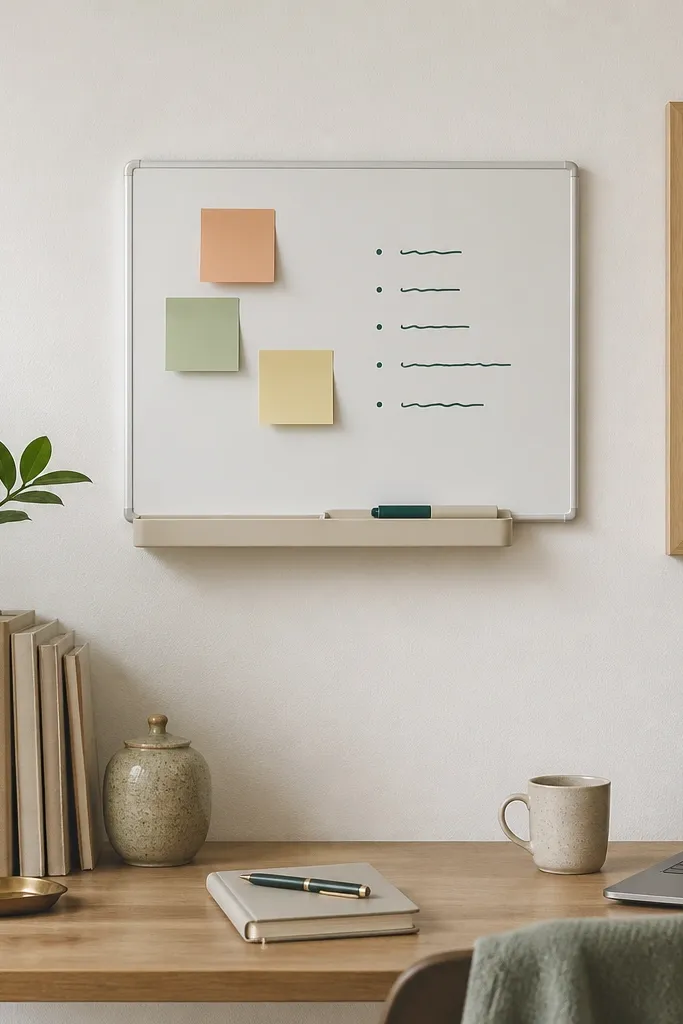
A whiteboard above the desk reduces repeated questions and keeps assignments visible. The warmth comes from the tray color and the marker choice. Dark teal and charcoal look calmer than neon colors, and they pair well with cream storage. When kids can check the board at eye level, the desk stays cleaner because fewer papers pile up.
Pick a board around 18-24 inches wide. Attach it so the writing line sits about 3-5 inches above the student’s top-of-head comfort zone. Use a tray with a matte finish, then add a single eraser and one marker only.
Write the next task list in pencil first, then trace the final in marker after the student confirms it.
Don’t use a cluttered board with too many colors — it turns into visual noise.
12. Pegboard side organizer with woven baskets
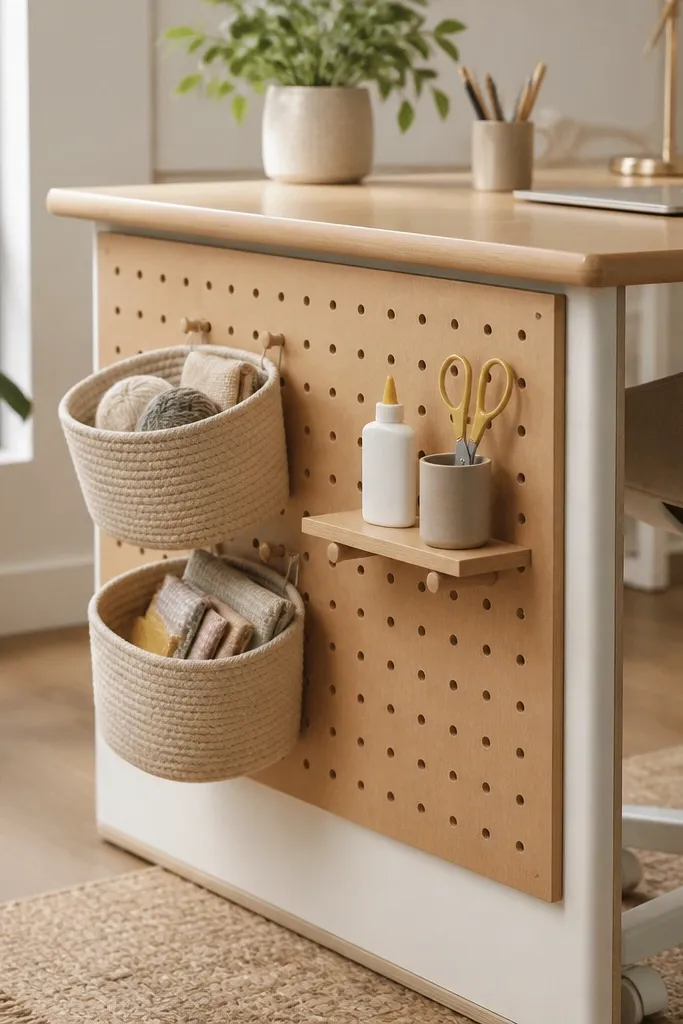
Pegboard makes organization look intentional because it’s built into the wall plane. Woven baskets soften the pegboard’s industrial look and make it feel cozy. Hanging items also keeps the desktop clear, which is where most desks look messy. The student can see supplies and return them to the same hook every time.
Mount pegboard to a wall or use a freestanding pegboard panel next to the desk. Hang baskets about 6-8 inches wide for small supplies. Add one small shelf for glue and tape so those bottles don’t roll.
Arrange by reach: student’s dominant hand side gets tools they use most often.
Avoid hanging heavy bins too low — they sag and look sloppy.
13. Sticky note roll-up in a fabric tube
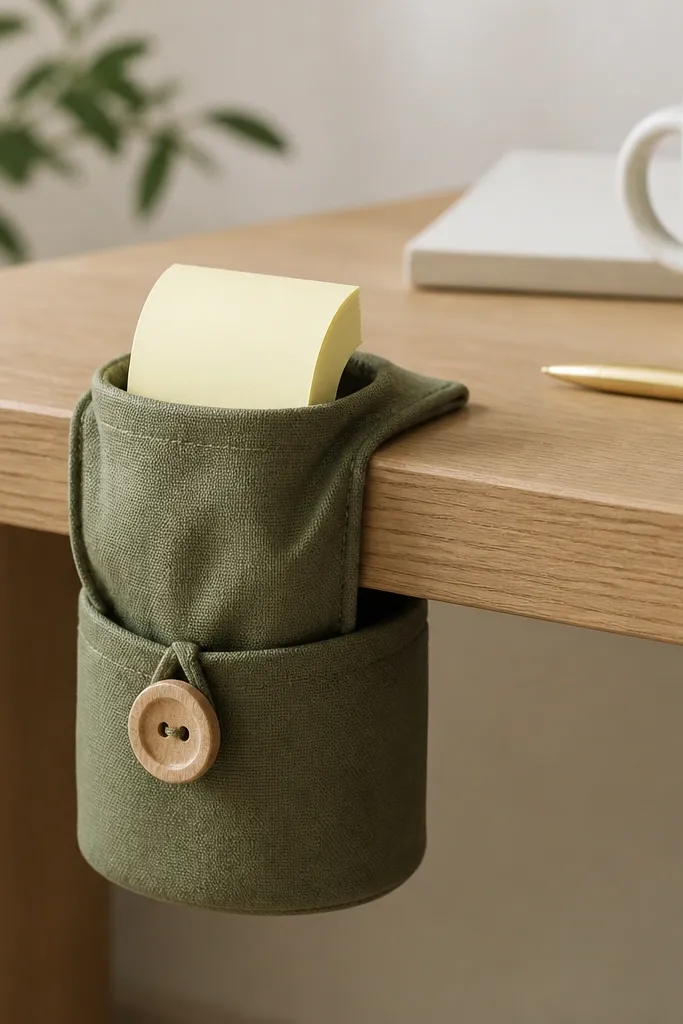
Sticky notes multiply faster than any other supply. A roll-up tube keeps them contained and makes them look like part of the desk decor. Olive fabric feels warm and hides scuffs from repeated grabbing. It also stops sticky notes from getting scattered under books.
Editor's noteWrite one category on the front button: “Questions” or “Reminders.”
Cut a fabric rectangle and sew or glue the long edges to form a tube, then add a backing circle or stiffener so it stands upright. Insert a small cardboard roll core or use a toilet-paper-roll cut down. Keep the opening tight so notes tear cleanly.
Skip thisSkip loose tubes — sticky notes slide out and ruin the cozy look.
14. Book stand with warm wood blocks and a book spine guide
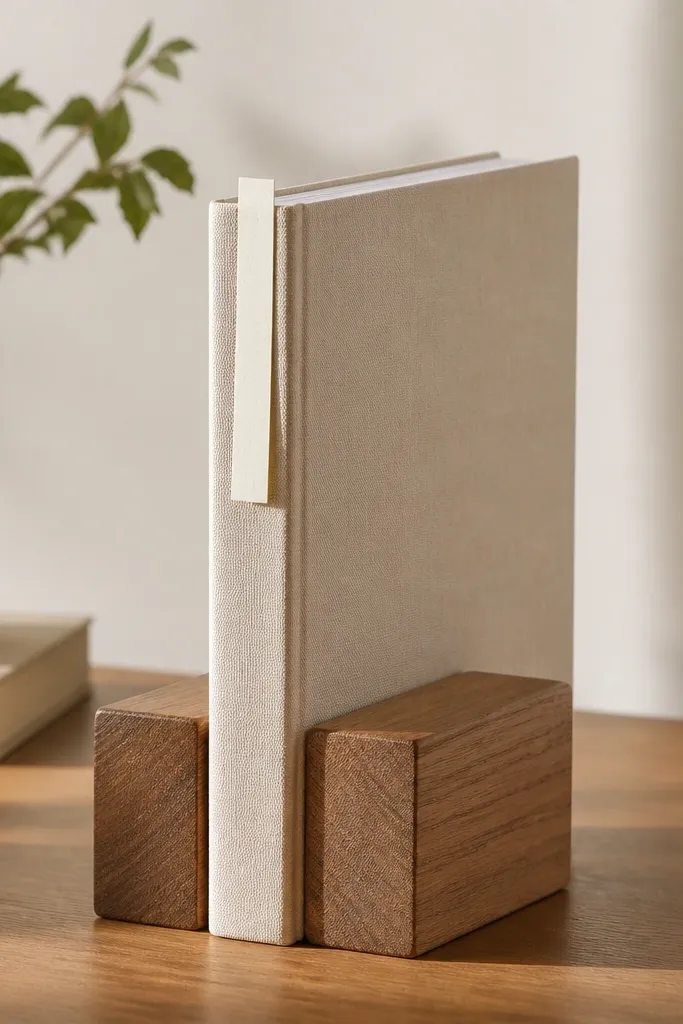
When books sit flat, kids hunch and papers shift. A book stand holds the book at a comfortable angle and keeps the workspace neat. Warm wood blocks visually connect the desk pieces, which makes the whole setup feel cohesive. A spine guide prevents the book from sliding and keeps the student from repositioning every minute.
Editor's noteTilt the stand slightly higher for younger kids — it reduces strain and keeps the desk calmer.
Use two wood blocks wrapped with sanded wood or covered in fabric for grip. Place them on the desk about 6-8 inches apart so the book doesn’t tip. Add a small strip of label tape along the side where the spine should align.
Skip thisAvoid slippery acrylic stands — they slide on mats and look cheap.
15. Corner "quiet bin" for fidgets and sensory tools
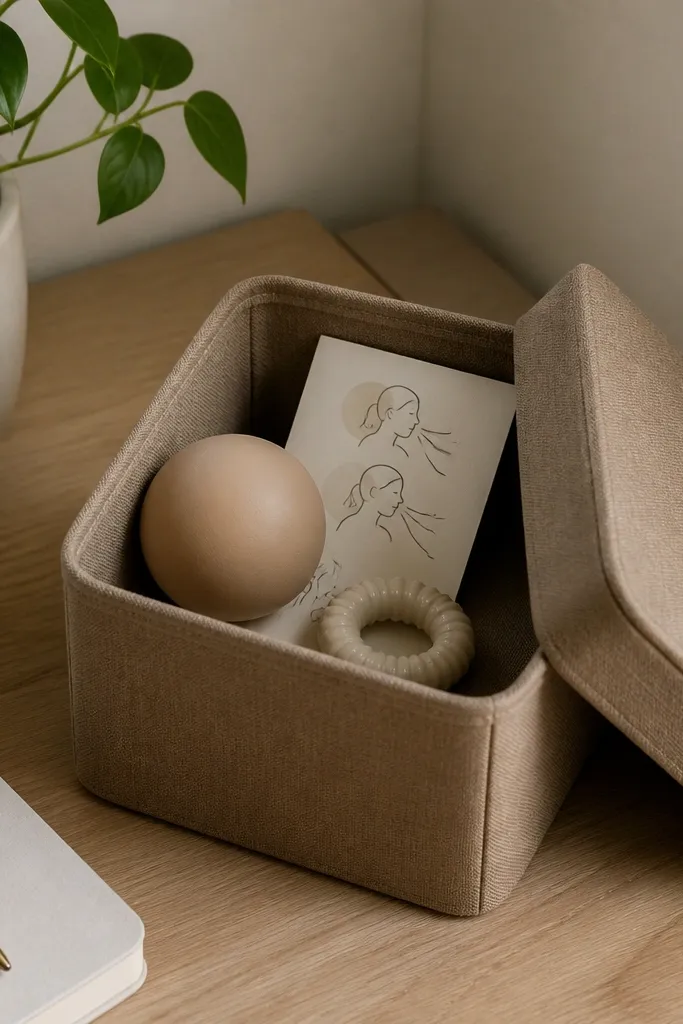
Kids don’t always need a full reset. A quiet bin gives them a fast tool when they get wiggly, and it prevents random items from spreading across the desk. Keeping it in the corner keeps the main work area clean. The fabric bin and warm tone make it feel safe instead of punitive.
Editor's noteSet a timer for the bin — 3 minutes, then back to work.
Use a small lidded bin sized to fit in the desk corner without blocking the chair. Store only a few items: one stress tool, one tactile item, and a tiny card with two breathing steps. Label the bin so the child knows when to use it.
Skip thisDon’t store loose fidgets in a drawer — they become a clutter dump.
16. Lidded "finished today" box with a ribbon pull
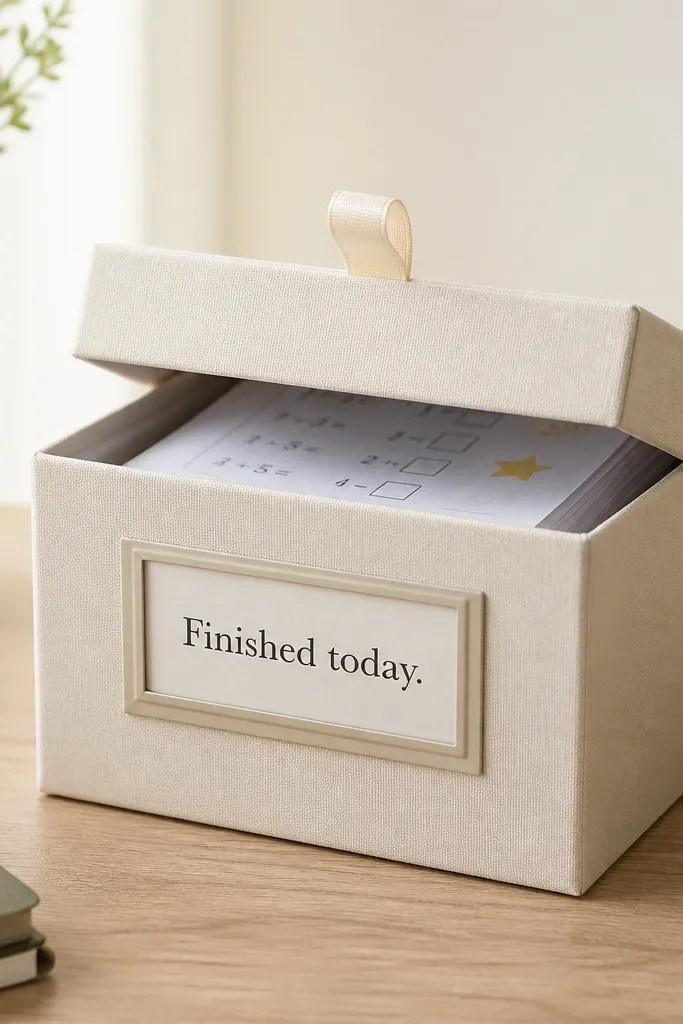
A finished box is the simplest way to stop completed papers from disappearing into backpacks. The ribbon pull makes opening easy for kids with smaller hands. Cream color looks cozy, and the lid keeps paper edges from curling. Seeing the box fill up gives a clear sense of progress.
Editor's noteEmpty it at the end of the day into a single folder — don’t let it become another pile.
Make or buy a box about 10x8 inches. Use thick cardstock or label tape for the label, then place it on the front. Keep it next to the paper tray so the child moves papers from working to finished in one motion.
Skip thisAvoid translucent lids with no label — kids forget what’s inside.
17. Cable clips + fabric tape spine for the headphone set
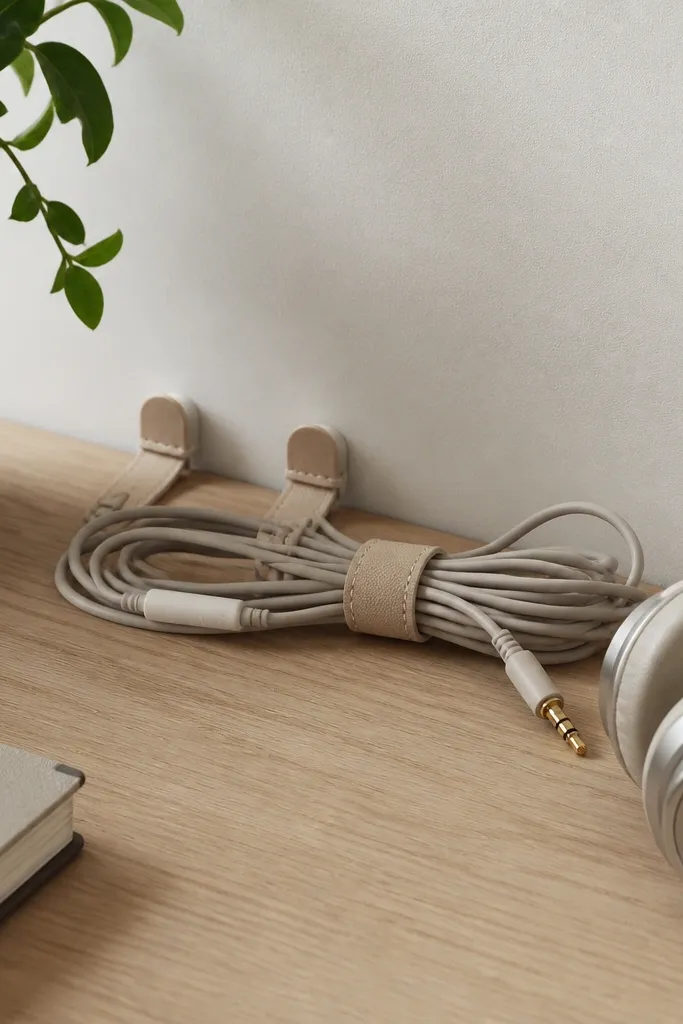
Headphones are a desk clutter magnet, especially when cords tangle with chargers. Coiling and strapping the cord turns a mess into a neat loop. Fabric tape looks warm and matches the rest of the cozy theme better than plastic zip ties. It also protects the cord from sharp bends.
Coil the cord using the “loop and tuck” method: wrap around your fingers, then tuck the end into the first loop. Secure with a fabric tape strip and add two cord clips along the back edge to keep it from swinging forward. Store the headphones on a small stand when not in use.
Tape a tiny tag to the strap that says “Listen” so the child grabs the right item fast.
Skip rubber bands — they dry out and snap, and the cord ends up loose.
18. Drawer organizer with rounded dividers and warm labels
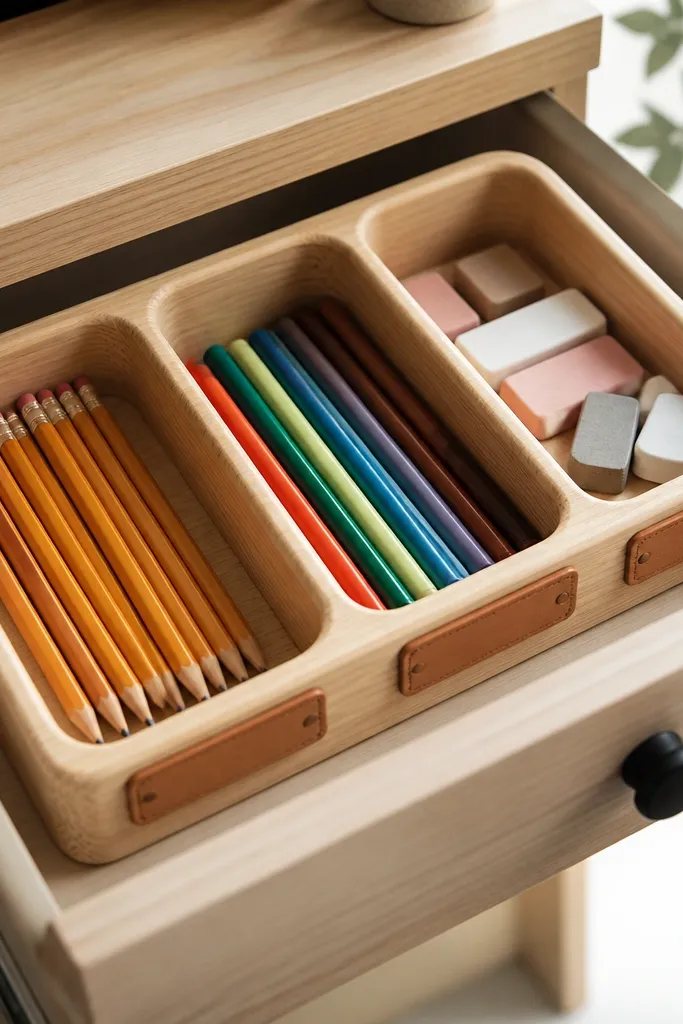
Rounded dividers keep supplies from getting jammed and make it easier for little hands to put items back correctly. Warm label strips make the drawer readable without a lot of text. This setup reduces the drawer rummaging that makes everything look messy. It also makes the desk feel like a system, not a pile.
Editor's noteKeep the drawer to one category per day if your student changes activities often.
Use adjustable drawer dividers or DIY dividers from thin foam board covered in fabric. Create sections that match item sizes: long pencils need one tall slot, markers need a wider slot. Put labels at the front edge so they’re visible even when the drawer is half open.
Skip thisDon’t label with tiny handwriting that fades — it looks messy and kids ignore it.
19. Mini gallery wall above desk using kids' grade-color prints
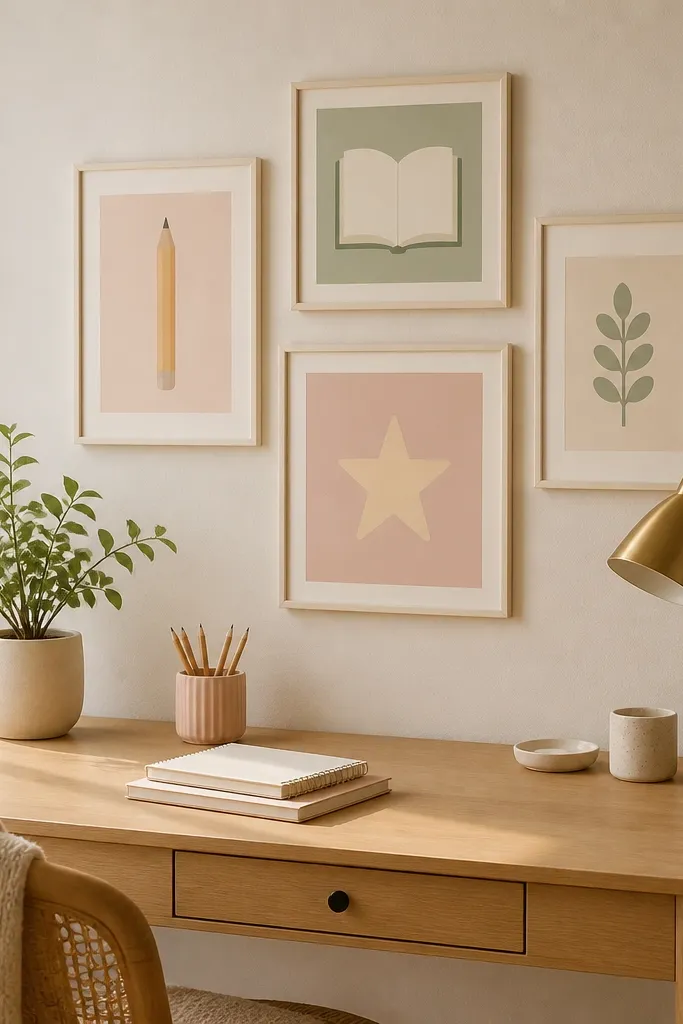
When the wall above a desk is blank, the desk space feels unfinished. A mini gallery in warm tones makes the whole area feel like a study corner. I use simple icon prints because kids actually look at them when they’re deciding what to do next. The warm frames also tie back to your other cozy materials.
Use 3-4 frames in matching cream or light oak. Print simple icons or create your own with thick marker on white paper, then frame with matting. Keep the height so the bottom frame is about 6-10 inches above the desk surface for comfortable viewing.
Rotate one print per month so the space stays fresh without redoing everything.
Avoid crowded wall art — too many small items pull focus from studying.